

The Ministry of Finance has announced the successful completion of the restructuring of government derivatives linked to gross domestic product (GDP warrants). According to the Ministry, holders of GDP warrants totaling $2.6 billion supported the exchange of these instruments for standard debt securities of Ukraine.
This is reported by Finway
Content of the Restructuring and Its Consequences
As a result of the voting, 99.06% of the holders agreed to the proposed deal, significantly exceeding the required threshold of 75%. This allowed Ukraine to convert nearly all of the outstanding nominal volume of GDP warrants into a new class of bonds C, maturing in 2032, totaling $3.497 billion. A small portion of the securities will be exchanged for bonds B, maturing in 2030 and 2034, totaling approximately $34 million. Additionally, within this transaction, Ukraine will cancel GDP warrants worth $604 million that were owned by the state.
“This significant achievement is an important step towards strengthening Ukraine’s debt sustainability and enhancing budget predictability by removing from circulation the GDP warrants issued in 2015 as part of the previous restructuring of state debt caused by the annexation of Crimea and the invasion of Russia in Donbas.”
Financial Effect and Long-term Benefits
The Ministry of Finance emphasizes that the restructuring significantly reduces risks for public finances. Forecasts suggest that total payments on GDP warrants from 2025 to 2041 could range from $6 to $20 billion, depending on the pace of economic recovery. Notably, payments on these instruments were “unlimited and tied to the annual growth of real GDP, with no protection against economic downturns,” which created additional volatility in public finances.
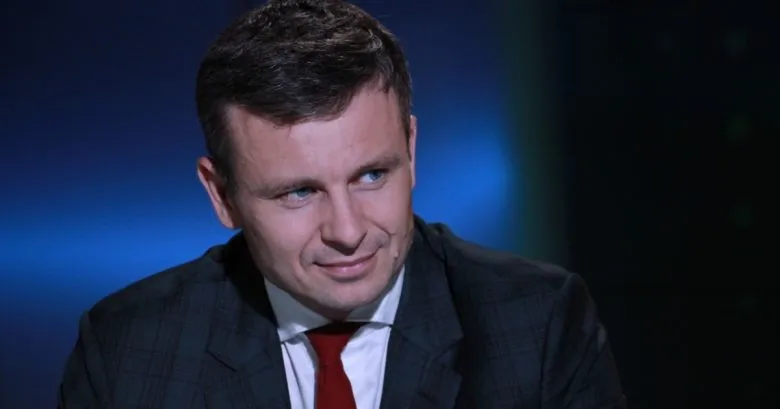
Finance Minister Serhiy Marchenko noted that the exchange of GDP warrants for standard debt instruments with an aggregation mechanism provides greater predictability and reduces long-term volatility in the country’s finances. According to him, removing this instrument from circulation will allow Ukraine to save billions of dollars during the post-war recovery period and preserve resources for defense financing in the challenging conditions of a full-scale war.
It is worth recalling that in April 2025, the Ministry reported difficulties in negotiations with GDP warrant holders regarding restructuring, and by May, Kyiv was set to make significant payments or declare default. Now, thanks to the agreement reached, Ukraine completely removes this risky instrument from circulation and gains additional space for stabilizing public finances.