

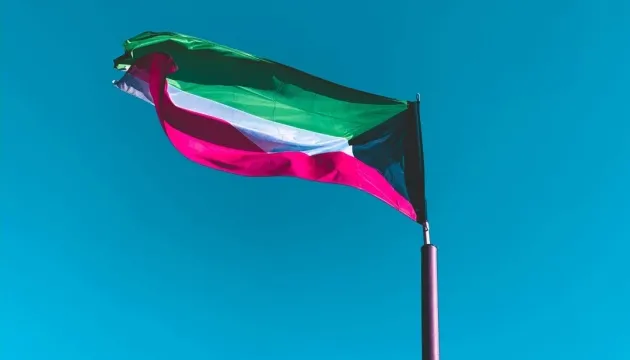
The Kuwaiti authorities have announced a new force majeure regarding the export of crude oil and petroleum products due to serious repercussions for the oil sector following recent events in the region. Despite a partial resumption of traffic in the Strait of Hormuz, the country is unable to promptly fulfill all its obligations to foreign clients.
This is reported by Finway
Impact of the Conflict on Kuwait’s Oil Infrastructure
According to a representative familiar with the situation, the full restoration of Kuwait’s oil sector operations will require additional time even after the situation in the Middle East stabilizes. In early March, Kuwait Petroleum Corp. had already invoked force majeure—a legal mechanism that allows for temporary non-fulfillment of contractual obligations due to unforeseen circumstances.
“Kuwait has suffered numerous blows to its oil infrastructure from Iran since the onset of the conflict in the region, resulting in the country’s oil production currently being at levels last seen in the early 1990s after the Iraqi invasion.”
Local authorities express confidence that a return to pre-war oil production levels is possible within a few months after the cessation of hostilities. However, the current situation remains challenging due to the extensive shutdown of infrastructure.
Closure of the Strait of Hormuz and Its Impact on the Global Market
The war with Iran has effectively paralyzed tanker traffic in the Strait of Hormuz, causing oil storage facilities in the region to become overloaded and leading to instability in global energy markets. The governments of Gulf countries, which heavily rely on energy exports, have been forced to cut oil, gas, and petroleum product production due to the inability to export raw materials. According to estimates from the U.S. government, oil production in the region decreased by more than 9 million barrels per day in April 2026, marking one of the most serious challenges for the economies of the region’s countries.
Commercial traffic through the Strait of Hormuz remains limited, and recent detentions of Iranian vessels by the U.S. Navy have only heightened tension and uncertainty for the global oil market.