

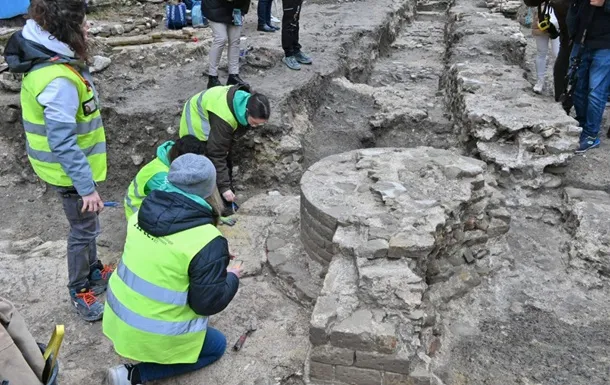
Archaeologists in the Italian city of Fano have made a sensational discovery — they have confirmed the existence of a structure that was detailed over two thousand years ago by the Roman architect Marcus Vitruvius Pollio. During the reconstruction of Andrea Costa Square, researchers stumbled upon the ruins of a basilica that astonishingly matches the drawings and descriptions in the treatise “De Architectura.”
This is reported by Finway
A Discovery That Changes Our Understanding of Ancient Architecture
The discovered building features a clear rectangular plan and a system of twelve columns: eight of them are located along the long sides, while four are positioned along the short sides. This is precisely the configuration that Vitruvius described in detail, allowing researchers to almost certainly identify the ruins as the legendary basilica that had been considered lost for centuries.
“The Italian Ministry of Culture has called the discovery a turning point for archaeology. According to Minister Alessandro Giuli, the find changes our understanding of Fano’s role in the history of ancient architecture and proves that the city was a key hub of engineering thought even in Roman times.”
The search for this basilica has lasted several centuries and was long based solely on written references. Only in 2022, on a street named after Vitruvius, did archaeologists uncover fragments of ancient walls and marble floors characteristic of prestigious public buildings from the ancient era, which served as the first serious confirmation of its existence.
The Historical Significance of the Discovery
Marcus Vitruvius Pollio was an outstanding theorist and practitioner of architecture: he served as a military engineer during the time of Julius Caesar, created war machines, and left behind the fundamental work “Ten Books on Architecture.” This book systematized the experiences of the Greeks and Romans, becoming the foundation for the European architectural tradition for many centuries. Now, the discovery in Fano serves as tangible evidence of Vitruvius’s theory — not only have the descriptions been preserved, but also the actual stones, columns, and planning that have survived to this day.