

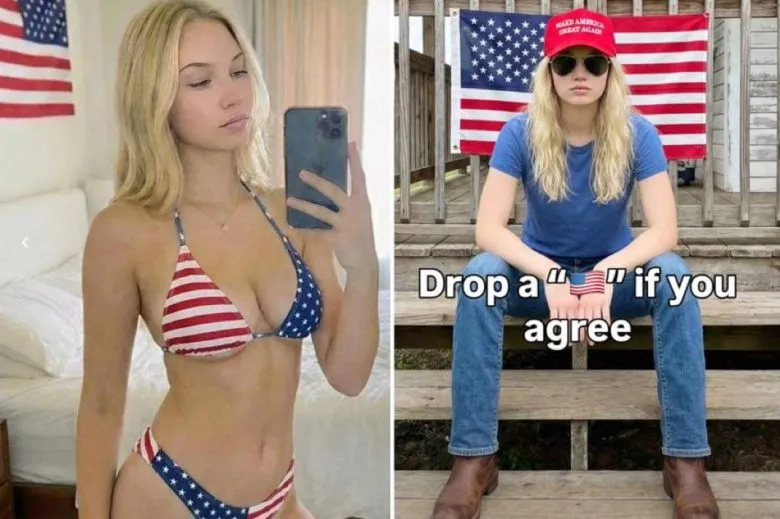
A 22-year-old medical student from Northern India has discovered a unique way to earn money by creating a fictional persona using artificial intelligence — Nurse Emily Hart, who targets a conservative audience in the U.S. The project quickly gained popularity on social media, bringing the creator thousands of dollars each month.
This is reported by Finway
How Artificial Intelligence Helped Find a Niche
Initially, while trying to support himself during his studies and preparing for emigration, the student experimented with content by creating images of attractive girls. However, the standard approach did not lead to success. Seeking advice from Google Gemini, he was recommended to focus on a narrow target group.
“If you create a standard ‘hot girl,’ you will be competing with a million other models,” the AI wrote.
Eventually, the student focused on the MAGA niche — a community of supporters of the slogan “Make America Great Again.” He invented the character of a nurse, visually inspired by Hollywood images, and began posting a combination of everyday scenes with provocative political messages. The content addressed themes of Christianity, gun rights, immigration, and criticism of liberal ideas.
Viral Success and Monetization of the Artificial Character
Thanks to a well-curated image and content, Emily Hart’s account quickly gained popularity: in the first month, the number of followers exceeded 10,000, and individual videos garnered millions of views.
“Each of my videos garnered between 3 to 10 million views. The algorithm loved it,” he claims.
Part of the audience transitioned to paid platforms like Fanvue, where the student offered exclusive content and subscriptions. He also sold merchandise with political slogans. According to him, the project took up to an hour a day, and the income amounted to “a few thousand dollars a month.”
Later, additional artificial intelligence tools, including Grok, were used to create even more provocative content. Users actively paid for access to the content and interaction with the fictional girl.
“I was essentially doing nothing — and I was just flooded with money,” he says.
Meanwhile, most followers were not concerned about whether the character actually existed. Some even sent videos and tips, indicating a high level of engagement and trust in the artificial model.
Experts note that such cases are becoming increasingly common due to the development of generative AI. Social media algorithms promote the rapid dissemination of niche and provocative content, and fake accounts appear more realistic than ever.
Despite platform requirements to label such content, these rules are often ignored, allowing such projects to quickly build an audience and monetize.
The student does not consider his activities to be deceitful and claims that the audience consciously paid for their favorite content. However, he later decided to focus on his studies and left the project.
