

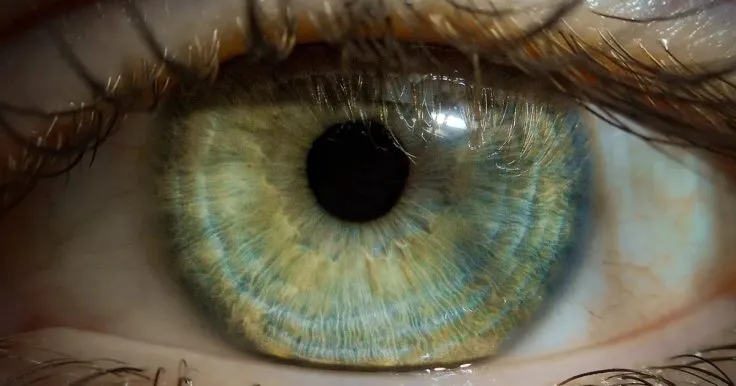
Green eye color is the rarest among all shades of the iris, with only about 2% of the world’s population possessing this unique feature of appearance. People with green eyes belong to a small group that stands out among others as rare and special.
This is reported by Finway
How Eye Color Diversity Arose
Scientists suggest that around 10,000 years ago, almost all humans on Earth had brown eyes. However, over time, due to a random genetic mutation, there was a decrease in melanin production in the iris, leading to the emergence of new eye shades. It is thanks to these changes that today we can encounter many different eye colors.
Eye color is determined by the amount of melanin—a pigment responsible not only for the shade of the iris but also for skin and hair color. Melanin is produced in specialized cells called melanocytes, which synthesize it from the amino acid tyrosine under the influence of sunlight.
- Melanin is the main pigment that determines dark or light eye shades.
- Iris is a thin diaphragm between the cornea and the lens, with the pupil located in the center.
The Genetics of Green Eye Color
According to findings from the American Academy of Ophthalmology, green eye color is the rarest in the world, found in only about 2% of people. It was previously believed that eye shade is determined by a single gene. However, even parents with blue eyes can have children with brown eyes, indicating more complex genetic mechanisms.
The gene OCA2 plays a leading role in determining eye color, responsible for producing dark brown melanin. This gene accounts for about 75% of the eye shade. Another key gene, HERC2, regulates the activity of OCA2 and can alter the amount of melanin, resulting in lighter shades of the iris. In addition to these, dozens of other genes interact in complex ways to shape eye color.
“A unique combination of genetic variations is necessary for the emergence of green eye color, providing the optimal ratio of light brown and yellowish pigment known as lipochrome. This combination causes the characteristic green shade that we observe. Notably, green pigment is absent in the iris, and the green color is a result of the optical effect from the mixing of pigments and light scattering.”
Only a few individuals can achieve such a genetic balance, which is why green eye color is so rare. Experts note that even among those with green eyes, shades always remain unique to each person. This is explained by the complex interaction of numerous genes, as well as the influence of developmental factors and the environment that shape the structure and texture of the iris throughout life.
Interestingly, human eyes initially evolved as a single eye located on the top of the head, and discoveries in astrophysics suggest the existence of hidden passages in our galaxy that could potentially connect different parts of the universe.