

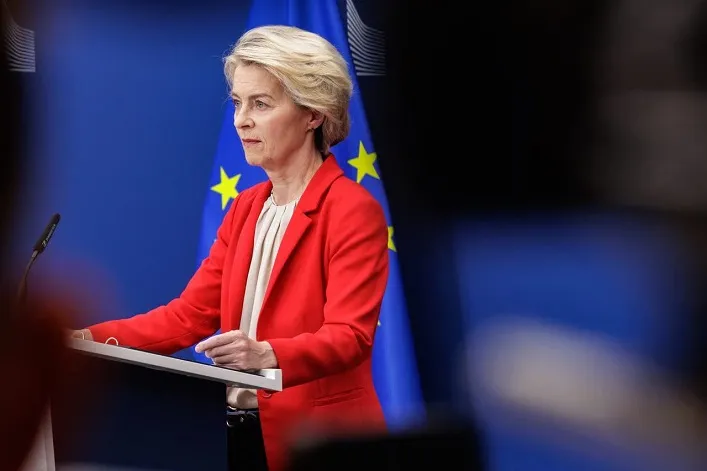
The European Commission has officially presented a new, already the 18th sanctions package aimed at the Russian Federation. The proposed package includes extensive restrictions for Russian and foreign companies collaborating with the Russian military-industrial complex, as well as affecting the Russian Direct Investment Fund. The sanctions list includes nine individuals and 33 legal entities.
This is reported by Finway
Sanctions Against the Energy Sector and Finance
One of the key points of the new package is the implementation of sanctions against the “Nord Stream 1” and “Nord Stream 2” pipelines. The aim of this step is to prevent the launch or resumption of operations of these pipelines in the future. In addition, the European Commission is initiating a reduction of the price cap on Russian oil from $60 to $45 per barrel, and also proposes to expand the sanctions list of tankers from the so-called Russian shadow fleet by an additional 77 vessels – bringing the total number of affected vessels to 342.
A complete ban on the import of oil products produced from Russian raw materials into the EU is also planned, and restrictions on the financial sector will become stricter. In particular, the existing ban on the use of the SWIFT system will be transformed into a complete ban on transactions for another 22 banks and financial operators, including those from third countries that help circumvent sanctions and finance trade with the Russian Federation.
Additional Trade and Economic Restrictions
Among other measures is a ban on the export of goods to Russia worth over 2.5 billion euros per year. This aims to further limit Russia’s access to goods and technologies that could be used for military purposes.
“Sanctions are also planned against the ‘Nord Stream 1’ and ‘Nord Stream 2’ pipelines to completely prevent their operation from being restored in the future. Additionally, Brussels proposes to lower the price cap on Russian oil from $60 to $45 per barrel. At the same time, the EC plans to impose restrictions on another 77 tankers of the Russian shadow fleet, expanding this sanctions list to 342 vessels.”
However, Slovak Prime Minister Robert Fico stated that his country may not support the new sanctions package if the European Union does not develop a clear compensation mechanism for Bratislava regarding the potential risks associated with the abandonment of Russian energy resources.