

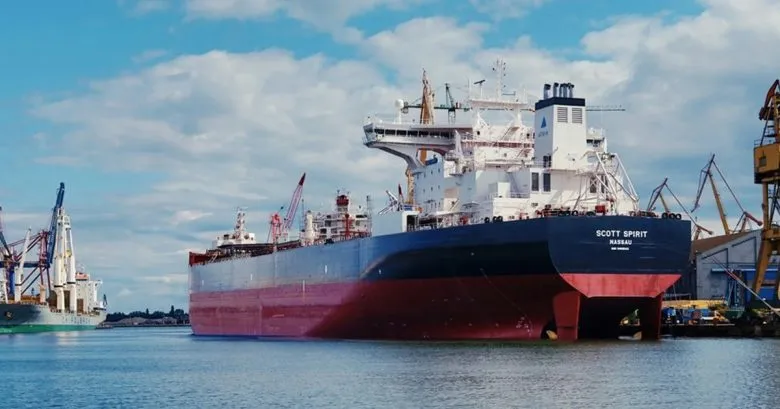
Estonia, a NATO member, has decided not to detain Russian oil tankers in the Baltic Sea, as this could lead to serious military escalation from Russia. This decision was made against the backdrop of increasing military activity by the Russian Federation in the Gulf of Finland. This was reported by the Commander of the Estonian Navy, Ivo Vark.
This is reported by Finway
Risks of Military Escalation and Estonia’s Position
Despite the recent efforts by the United Kingdom, France, Belgium, and Sweden to detain vessels of the Russian so-called “shadow fleet,” Estonia is exercising caution. The country is located near key Russian oil and gas export facilities in the Gulf of Finland, which increases risks in the event of forceful actions.
According to Ivo Vark, attempts to detain tankers that are under Western sanctions could compel Moscow to take military steps to protect them.
“The risk of military escalation is simply too high”
– Vark emphasized.
Last year, Estonia had an unsuccessful attempt to board a Russian vessel. In May 2025, during an attempt to detain a flagless oil tanker heading to Russia to circumvent Western sanctions, a violation of NATO airspace by a Russian fighter jet was recorded. Ultimately, the Russian aircraft escorted the tanker into Russian waters.
Increased Russian Military Presence
Following this incident, Russia began permanent patrolling of the Gulf of Finland with two to three armed military ships and also deployed additional forces in various parts of the Baltic Sea along the routes used by tankers carrying Russian oil. Vark noted that the Russian military presence in the region has become significantly more noticeable.
He clarified that Estonia would only intervene in the event of an immediate threat, such as if underwater infrastructure is damaged or an oil spill occurs.
According to Vark, Russian military activity in the North Sea and the Atlantic Ocean is much weaker, allowing Western countries to act more confidently regarding such vessels.
Reporters aboard an Estonian military vessel in the Gulf of Finland observed a Russian Navy corvette alongside a group of tankers waiting to enter a Russian port for loading oil.
The number of tankers at the Vainloo anchorage station in Estonia’s economic zone, according to Vark, has tripled this week, reaching 30-40 vessels. This is related to disruptions in loading schedules due to recent attacks by Ukrainian drones on Russian ports.
The Kremlin views Western sanctions as an attempt to undermine the Russian economy and insists on the right of its vessels to free transit through the Baltic Sea. Russia has also stated that it is prepared to respond to any attempts to obstruct the movement of its tankers.