

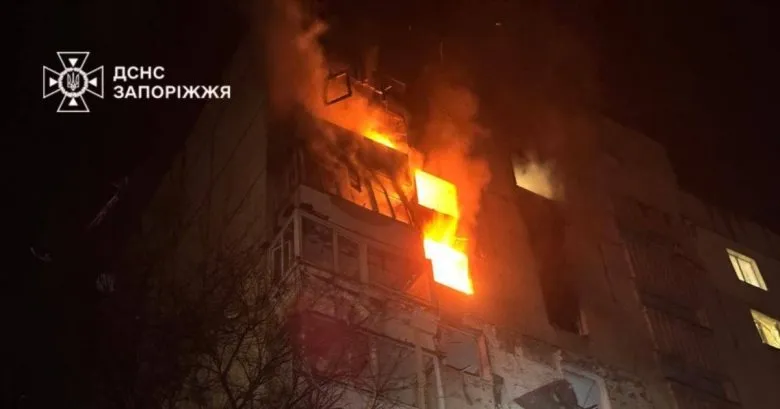
As a result of yet another massive airstrike by the Russian Federation on Zaporizhzhia and the Poltava region on the night of March 24, at least three Ukrainians have been killed, and around twenty others have been injured. This was reported by the heads of the regional military administrations.
This is reported by Finway
Consequences of the Strikes on Poltava and Zaporizhzhia
The head of the Poltava Regional Military Administration, Vitaliy Dyakivnych, noted that residential buildings and a hotel were damaged in the Poltava community. Fires broke out due to the shelling. According to updated data, two people were killed, and the number of injured reached eleven.
In Zaporizhzhia, which was targeted in a combined attack using drones and missiles, one person was killed, and five others were injured. According to the head of the Zaporizhzhia Regional Military Administration, Ivan Fedorov, six apartment buildings and two private houses, a store, non-residential buildings, and an industrial infrastructure facility were damaged.
“Six apartment buildings and two private houses, a store, non-residential buildings, and an industrial infrastructure facility were damaged,” the official wrote in a Telegram message.
Targeted Shelling: Signs of War Crimes
On the evening of March 23, President Volodymyr Zelensky addressed citizens, urging them to respond carefully to air raid alerts, warning that intelligence indicated Russia might be preparing a massive missile strike. He emphasized that appropriate orders for air defense units had already been issued.
Russia continues regular attacks on Ukrainian cities and civilian infrastructure, using various types of weaponry: strike drones, missiles, aerial bombs, and multiple launch rocket systems. Ukrainian authorities and international organizations regard such actions as war crimes, noting their targeted and systematic nature.
Shelling of civilian life support systems, healthcare facilities, and depriving people of access to electricity, heat, water, communication, and medical services exhibit signs of genocide under international law.
The UN Convention on the Prevention of the Crime of Genocide defines such actions as attempts to completely or partially destroy a national, ethnic, racial, or religious group, including through the physical destruction of its members, creating unbearable living conditions, forcibly transferring children, persecuting representatives of culture and the intelligentsia, and publicly inciting such crimes.
The Russian authorities have repeatedly made public statements denying the existence of the Ukrainian people and state, as well as calls for the destruction of Ukrainians as a nation. In the occupied territories, there have been recorded cases of persecution of individuals with pro-Ukrainian views, destruction of the intelligentsia, deportation of children, and targeted destruction of Ukrainian cultural heritage.
All 149 countries that are parties to the Genocide Prevention Convention are obligated to prevent and punish such crimes both in wartime and peacetime. Meanwhile, the Russian leadership continues to deny attacks on civilian objects and the deaths of civilians in Ukraine.