

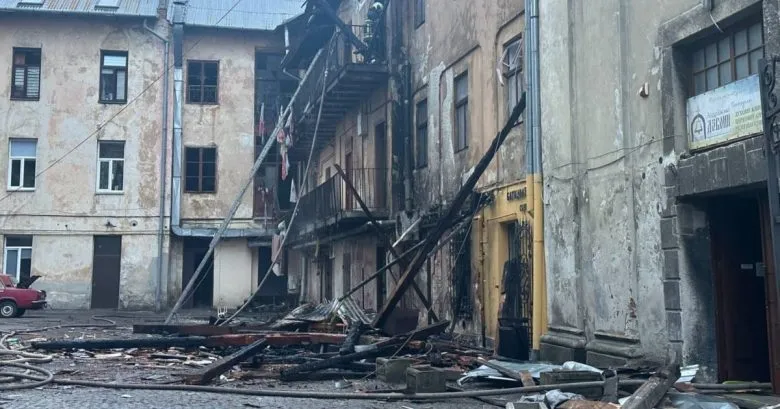
On March 24, the Russian Federation conducted one of the largest drone attacks on Ukrainian territory. According to the Air Forces, throughout the day, from 9:00 AM to 6:00 PM, the occupiers launched 556 strike drones of various types.
This is reported by Finway
Scale of the Air Attack and Geography of Strikes
The military reports that during the so-called conditional day—from 6:00 PM on March 23 to 6:00 PM on March 24, 2026—the enemy deployed nearly a thousand strike drones, including Shahed, Gerbera, and other models. A significant portion of the drones approached from the north—through the Chernihiv and Sumy regions. This time, the geography of the attack was much broader than during the night: the Poltava, Kyiv, Mykolaiv, Vinnytsia regions, and western areas—from Khmelnytskyi to Lviv—were hit.
“Unfortunately, 15 hits have been recorded. All possible air defense means have been engaged to repel the air attack—manned aviation, anti-aircraft drones, electronic warfare, and ground-based air defense,” the report states.
Results of Counteraction and Qualification of Russia’s Actions
As of 6:00 PM, Ukrainian defenders report the destruction or suppression of 541 strike drones by air defense forces. Combat operations against the drones continue uninterrupted. Over the past night, the enemy launched 392 drones and 34 missiles of various modifications at Ukraine, of which 365 drones and 25 missiles were shot down. In total, the number of attacked drones reached 948 units over the day.
The Russian army systematically attacks Ukrainian cities and civilian infrastructure using various types of weaponry—strike UAVs, missiles, aerial bombs, and multiple launch rocket systems. Such actions cause significant damage to vital facilities and the civilian population across the country.
Ukrainian authorities and the international community qualify these strikes as war crimes of the Russian Federation and emphasize their targeted nature. Shelling of power plants, water and heating supply facilities, healthcare institutions, and other life-support systems is viewed as attempts to deprive peaceful residents of basic living conditions, which indicates genocidal actions.
Experts emphasize that the leadership of the Russian Federation has repeatedly stated its intentions to destroy the Ukrainian nation, and systematic strikes on infrastructure, persecution of citizens with pro-Ukrainian positions, deportation of children, and destruction of cultural heritage indicate a deliberate policy of exterminating Ukrainians as a people.
In light of this, international documents, such as the Convention on the Prevention and Punishment of the Crime of Genocide, adopted by the UN in 1948, obligate participating countries (currently 149) to prevent acts of genocide and punish those guilty of such actions both during wartime and in peacetime. Genocide, according to the Convention, is defined as actions aimed at the complete or partial destruction of a national, ethnic, racial, or religious group.
Among the signs of genocide are killings, causing serious bodily harm, creating conditions aimed at the physical destruction of people, as well as the forcible transfer of children, incitement to commit such crimes, and obstruction of childbirth. The Russian leadership denies accusations of targeted strikes on civilian infrastructure, despite numerous evidence of mass destruction of hospitals, schools, energy facilities, and other vital structures on the territory of Ukraine.