

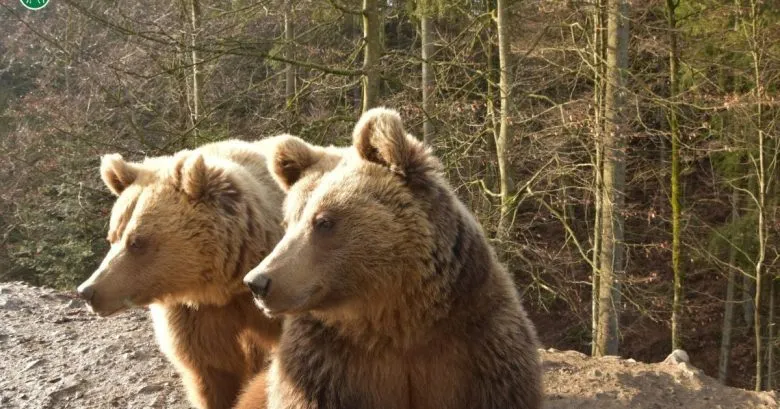
From now on, identifying individual bears has become significantly easier thanks to the innovative application of artificial intelligence. For ecologists and researchers, it is extremely important to track the lives of specific animals in order to effectively protect them and preserve biodiversity. However, this task has been complicated by the fact that bears can change their appearance significantly depending on the season and physiological state: after hibernation, they lose weight, while before winter, they gain mass.
This is reported by Finway
PoseSwin Technology: How the New Algorithm Works
Researchers from the École Polytechnique Fédérale de Lausanne (EPFL) and the University of Alaska Pacific (APU) have developed the PoseSwin program, which is based on artificial intelligence. Its uniqueness lies in the fact that it analyzes not variable body parameters, but stable anatomical features – such as the angle of the brow ridges, the position of the ears, and the shape of the muzzle. To train the algorithm, 72,000 photographs of 109 different bears were used, allowing the system to learn to ignore changes in weight or body size.
“Our biological intuition suggested that head features combined with posture would be more reliable than body shape,” explained researcher Alexander Matis.
Practical Applications and Future Possibilities
PoseSwin has already successfully undergone testing in Alaska’s reserves, particularly in Katmai National Park, where the “Fat Bear Week” is held annually. The program easily recognizes animals even in amateur photos taken by tourists, significantly expanding the possibilities for monitoring populations.
Currently, the system is tracking over 100 bears in the McNeil River Sanctuary, providing contactless monitoring of their health and movements. This approach reduces stress for the animals and increases the accuracy of research.
The developers are confident: if the algorithm can recognize bears – one of the most challenging species to identify – it can also be adapted for other animals. Already, PoseSwin demonstrates high effectiveness when working with macaques and even mice. The program is available in the public domain, allowing any interested researchers to utilize it.