

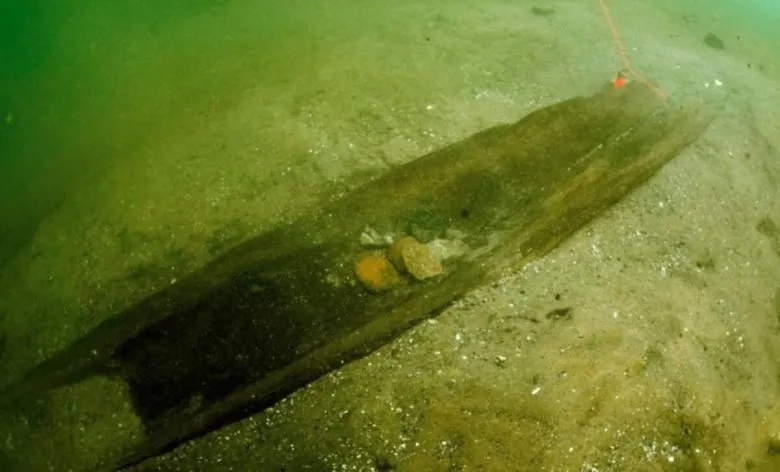
American archaeologists have found a unique collection at the bottom of Lake Mendota in Wisconsin — 16 prehistoric canoes, some of which are over 5200 years old. This makes them older even than the famous Egyptian pyramids in Giza.
This is reported by Finway
Preservation Conditions and Historical Significance of the Discovery
The exceptional condition of the boats is explained by the specific composition of the water in the lake. Due to the low oxygen content, thin layers of sediment, and consistently low temperatures, a sort of “time capsule” has formed at the bottom. Over the millennia, silt has isolated the canoes from the air, allowing the wood to remain almost intact.
Archaeologists have documented 16 boats grouped into two main areas. These are likely ancient landing sites where local communities gathered for fishing, trading, or traveling. The preserved artifacts indicate a complex social life and a rich history of this region.
Canoe Manufacturing and Recovery Technologies
Unlike stone artifacts, wooden items rarely survive in such a condition, making this discovery a true sensation. It is believed that the canoes were intentionally submerged to prevent the hulls from drying out and cracking during the winter cold. Some boats were found along with sinkers for nets — flat stones used for fishing.
Scientists applied radiocarbon dating, determining that the oldest canoe is over 3200 years older than the Great Pyramid. Some boats are made from red oak, known for its strength and water resistance after treatment. Craftsmen used fire to hollow out logs and then worked the charred wood with stone or shell tools.
Archaeologists in the USA have found 16 prehistoric canoes at the bottom of Lake Mendota (Wisconsin). Some of them are 5200 years old, making them older than the Great Pyramid of Giza.
The research team faces a challenging task: to carefully raise the ancient boats to the surface. Due to the high moisture content in the wood, there is a risk of deterioration after recovery. Therefore, only the sturdiest canoes can be safely extracted from the water, while the rest remain at the bottom, meticulously documented and preserved for future research.