

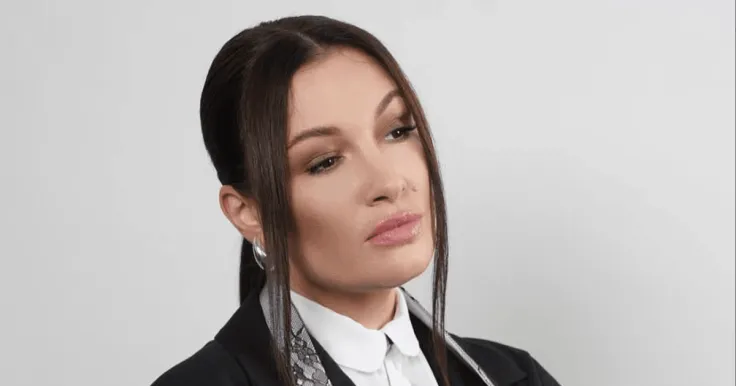
Ukrainian singer Anastasia Prykhodko found herself at the center of public attention after her remarks about the “Kyiv Russian” language sparked a wave of criticism on social media. Following the cancellation of her concerts, the artist published an emotional post on Facebook, responding to the negativity directed at her by the public.
This is reported by Finway
Emotional response from the singer
In her post, the performer sharply condemned the online bullying and expressed surprise at how easily Ukrainians are able to “destroy their own” instead of uniting against a common enemy. Prykhodko urged people not to seek enemies among their fellow citizens and noted that she does not intend to conform to others’ expectations.
“I will say it as it is. Without sugarcoating. I am surprised at how easily we have started to eat our own. Not to argue. Not to discuss. But to destroy. Is the real enemy not enough for you? Or is it easier to attack those who are close — because they don’t conform to what you think is right? Today someone didn’t say the word the way you wanted — and that’s it, the person is already ‘not one of us’, and if they don’t speak only Ukrainian, they are ‘the enemy’. Seriously? While you are here measuring ‘correctness’ — you are just doing the work for those who really want to tear us apart,” wrote Anastasia.
She also emphasized that she will remain firm in her position and will not please everyone, and if that is not enough for someone — that, according to her, is “your problem, not mine”.
Public reaction and criticism
The reaction of internet users to Prykhodko’s statement was mostly critical. In the comments to her post, Ukrainians expressed outrage over the speculation on the language issue, noting that public figures should approach their statements responsibly. Some users stressed the importance of the Ukrainian language, pointing out that defending the Russian language is currently perceived as supporting the enemy. Some commentators also noted that such statements could be an attempt to draw attention to oneself, using painful topics for Ukrainian society.
- “So why speculate on such a painful issue? You are deliberately provoking people to aggression. I also speak Russian in everyday life. But I do not claim that I speak Russian-Bila Tserkva. You are a media person and you are fully aware of what you are doing and where it will lead.”
- “Language has always mattered, matters, and will matter. You need to think first, then speak or write a post. In Ukraine — speak Ukrainian!”
- “You are not the first to defend the Russian language. Today, for every sane Ukrainian, language matters, and supporting and defending Russian is about supporting the enemy. You periodically try to change your stance, analyzing the public’s reaction to your thoughts out loud. Hate… Perhaps this is the only way for you to be at least a little popular right now.”
- “Nastya… there is a war in the country, and you are waving a red rag in front of Ukrainians… So who is provoking whom?? You are not lacking in intelligence and should know what to say and when… Especially since you are a public figure… It seems that you did this on purpose, either to remind people of yourself or to rub salt in the wounds of Ukrainians.”
The discussion surrounding Anastasia Prykhodko’s statements indicates that the language issue in Ukraine remains acute and capable of provoking a wide resonance in society even in 2026.