

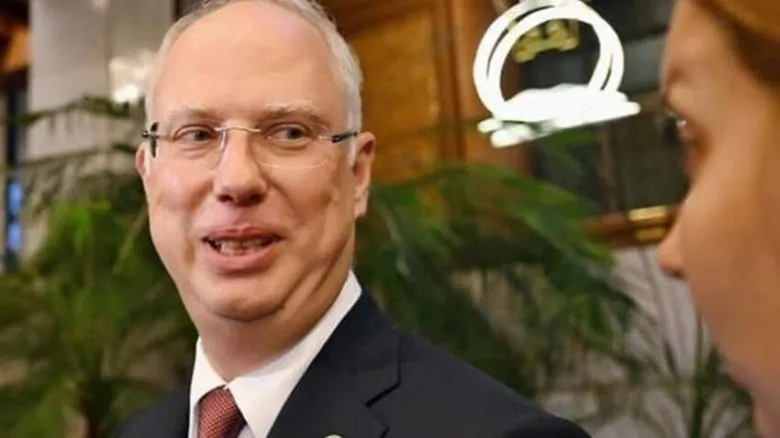
Kyril Dmitriev, who represents the Kremlin’s interests in negotiations, became embroiled in a public conflict with Financial Times journalist Christopher Miller regarding a publication about the so-called “peace plan” for Donbas. The article discussed the possibility of withdrawing Ukrainian troops from the region in exchange for security guarantees from the U.S.
This is reported by Finway
Reaction to the Financial Times Material
The dispute was triggered by an article published by the Financial Times detailing potential conditions for peace negotiations. Despite the White House officially denying this information, the material provoked a sharp reaction from the representative of the Russian delegation.
FT journalist Christopher Miller, one of the authors of the publication, shared a link to the article on social media platform X. In the comments to this post, Kyril Dmitriev stated that “the withdrawal of Ukrainian troops from Donbas is the path to peace for Ukraine.”
Escalation of the Discussion and Positions of the Parties
In response, Miller emphasized that the real path to peace involves the withdrawal of Russian troops not only from Donbas but from all of Ukraine. He stressed that the presence of Russian troops on Ukrainian soil precludes the possibility of achieving peace, and that occupation cannot serve as a basis for compromise.
“As long as Russian troops remain on Ukrainian soil, there can be no peace, and occupation has nothing to do with peace.”
Miller’s response elicited an aggressive reaction from Dmitriev, who resorted to using rhetoric typical of Russian propaganda. He accused the journalist of “inciting war” and spreading “British fake narratives,” claiming that such actions “delay peace.”
Dmitriev’s recent statements once again confirmed the Kremlin’s approach: in Moscow, any refusal to recognize the occupation as a compromise is perceived as hostile propaganda, and the concept of “peace” is reduced to Ukraine’s capitulation and relinquishment of control over its own territories.