

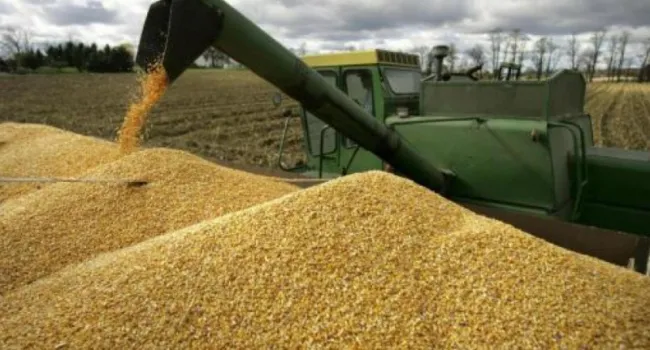
The Russian Federation has recorded the lowest sown areas for spring and winter grain crops since 2016. According to updated data, as of June 2025, the areas sown with spring crops amounted to only 11.1 million hectares, which is 10.5% less compared to the previous year. Winter wheat occupies 15.1 million hectares, which is 6.8% less than in 2024.
This is reported by Finway
Causes of Decline and Consequences for the Market
The main reason for the reduction in sown areas was the ineffective management decisions of the Russian government, which led to serious imbalances in the market. In particular, strict quotas on wheat exports (10.6 million tons) and the establishment of a recommended minimum price of $250 per ton significantly limited trading opportunities. Although in May the government lifted price restrictions and increased quotas, these measures did not stabilize the situation.
“Quotas on wheat exports (10.6 million tons) and the recommended minimum price of $250/ton effectively blocked trade. Only in May did the authorities lift price restrictions and increase quotas, but this could not stabilize the situation,” the report states.
Decline in Exports and Changing Priorities of Farmers
Market instability forces large companies to hold back wheat supplies in anticipation of more favorable conditions, while small farmers are compelled to sell their products at minimal prices. As a result, wheat exports from Russia in the first half of June decreased by 4.8 times to 565 thousand tons. The geography of exports has also sharply narrowed: products are supplied to only 11 countries instead of 40, as last year, with the largest reductions in supplies to Egypt and Turkey.
Against this backdrop, Russian farmers are actively shifting towards the cultivation of oilseeds and legumes, which offer significantly higher profitability—up to 30% compared to 4.9% for grains.
The crisis in Russia’s agricultural sector is exacerbated by the impact of international sanctions, a shortage of imported resources, logistical difficulties, and a high interest rate. In such conditions, a significant portion of farms is at risk of bankruptcy.