

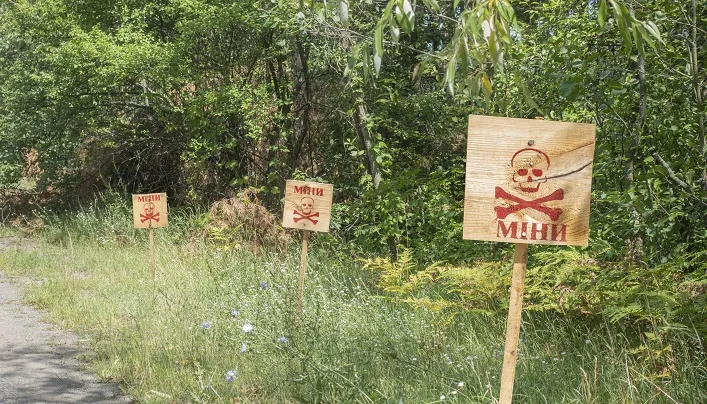
More than 20% of Ukraine’s territory is currently potentially contaminated with landmines and unexploded ordnance. Over 6 million people live in these regions. This situation significantly impacts not only the safety of the population but also the functioning of global food and energy markets.
This is reported by Finway
Impact of Landmine Contamination on the Economy and Agriculture
As of now, the area of potentially contaminated land has reached 139,000 square kilometers. This complicates the return of land to agricultural and energy use, thereby reducing the production and export volumes of Ukrainian goods. As a result, global prices for food and energy resources are rising.
“Every person on this planet is paying more for food and energy because of the war in Ukraine. And the reduction in prices directly depends on the return of land to use, which is impossible without mine clearance,” said Paul Heslop, head of the UNDP Mine Action Program in Ukraine.
Modern Approaches to De-mining and Challenges in the Process
To accelerate the de-mining process, advanced technologies are being used: satellite imagery, drones, and artificial intelligence. However, despite technological progress, specialists face a number of serious issues: a shortage of qualified personnel, mass population migration, limited funding, and inconsistent donor support. Although international donors have already pledged over 1 billion dollars for mine action, this amount is insufficient to fully resolve the problem.
The state continues to gradually restore access to agricultural land. In May, 660 hectares of cleared land were returned to farmers, and de-mining of nearly 1,350 hectares has also begun. Additionally, last month, the first Ukrainian heavy remote de-mining complex, “HART 5100,” received state certification, which will enhance the efficiency of land clearance operations.