


The question of what defines human essence has been a subject of inquiry for philosophers and scientists for centuries. Different cultures and thinkers have offered their own interpretations of human nature, which is reflected in languages — in the words used to denote our species.
This is reported by Finway
The Origin of the Word “Human” and Its Meaning
The word “human” in English, meaning “person,” has its roots in the Latin “humanus.” The latter originates from the Latin “homo,” which comes from the Proto-Indo-European root associated with the earth, allowing for an interpretation of the original meaning as “earthling.”
In other languages, there are equally profound meanings. For example, in Chinese, the character 人 (rén) sounds similar to 仁 (rén), which means kindness. This may indicate a close connection between human essence and moral behavior. Ancient linguistic roots often link humans with the mind and heart, emphasizing that thinking is one of the key traits of humanity.
Equally interesting is the origin of the word “animal,” which arises from the Latin “anima” — spirit or mind. This raises the question of when humans began to distinguish themselves from other living beings.
Philosophical Conceptions of Humanity
Determining the moment when humans began to see themselves as separate from other animals is challenging, but studies suggest a period around 40,000 years ago. It is during this time that the first evidence of myths, rituals, and symbolic thinking appears — actions that demonstrate a desire to make sense of the world.
Subsequently, the development of agriculture, religion, and social structures reinforced the notion of human exceptionalism. However, from a biological perspective, humans remain part of the animal kingdom, shaped by evolution, just like all other species.
Ancient philosophers offered various definitions of humanity. Plato, in his work “The Republic,” referred to humans as “two-legged creatures without feathers.” There is a famous incident where Diogenes mocked this definition by showing a plucked chicken and saying:
“Here is a human!”
After this, Plato was compelled to revise his definition.
Aristotle developed a different concept, calling humans “zoōn politikon” — “political animals,” emphasizing the role of social life. Medieval thinkers continued this tradition, defining humans as “rational animals” and highlighting thinking as a central trait.
Scientific Classification of Humans
In the 18th century, Carl Linnaeus revolutionized the understanding of human nature by proposing a classification system for living organisms in his work “Systema Naturae.” For the first time, humans were officially classified within the animal kingdom, specifically among primates, which sparked intense debate. Many insisted that humans deserved a separate category.
Linnaeus argued for his decision by calling for a clear biological boundary between humans and apes. His approach later gained recognition in the scientific community. It was Linnaeus who assigned humans the scientific name Homo sapiens — “wise man,” emphasizing the importance of self-awareness as a defining characteristic of our species.
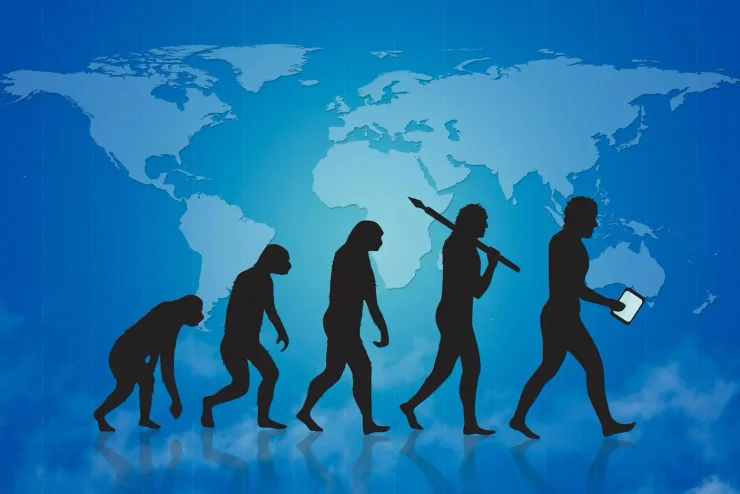
Carl Linnaeus also gave humans the scientific name Homo sapiens, meaning “wise man,” based on the idea that self-awareness distinguishes humans
Modern science agrees: despite the uniqueness of language, culture, and intellect, humans remain part of the natural world. Recognizing this allows for a deeper understanding of humanity’s place in the universal history of life on Earth.
Ultimately, the question of what it means to be human shapes our perception of ourselves and our role in nature. The ability to acknowledge human uniqueness while also recognizing our inseparable connection with other living beings helps build more responsible relationships with the surrounding world.