

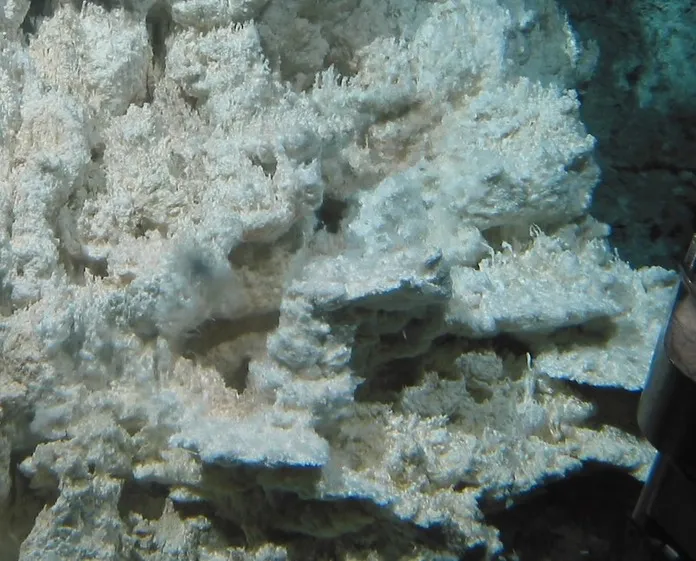
Deep beneath the Atlantic Ocean, scientists are exploring an unusual hydrothermal system known as the ‘Lost City’. It is believed that this underwater phenomenon has existed for over 120,000 years, making it the longest-known hydrothermal system in the world. The discovery has the potential to change our understanding of the origins of life on the planet and its possible limits.
This is reported by Finway
Unique Living Conditions of the ‘Lost City’
The hydrothermal field is located west of the Mid-Atlantic Ridge, at a depth of over 700 meters. It was discovered in 2000, and since then, the ‘Lost City’ has become the subject of intensive research by geologists, microbiologists, and astrobiologists. The impressive carbonate towers formed as a result of serpentinization—a process where mantle rocks interact with seawater, releasing hydrogen and methane.
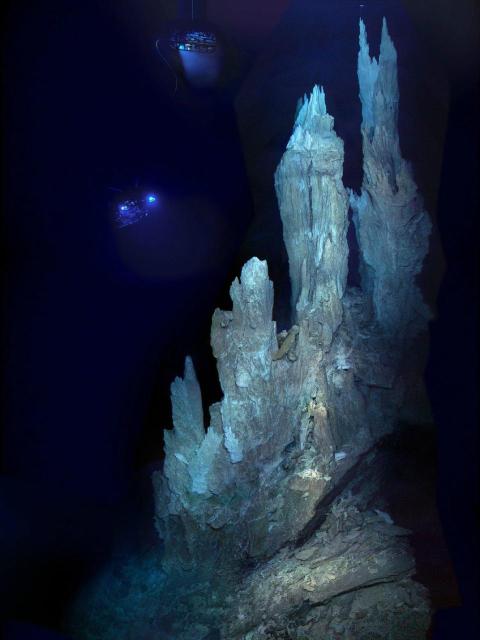
Unlike classic hydrothermal vents—the so-called ‘black smokers’—this system does not rely on volcanic heat. This is what has ensured its stability over tens of thousands of years. The constant flow of renewable gases produced here serves as an energy source for local microorganisms.
Significance for Science and Conservation Issues
In the cracks of the underwater chimneys live chemosynthetic microbes, which derive their energy from chemical reactions rather than sunlight. There are also anaerobic ecosystems—organisms capable of living without oxygen. Scientists believe that such an environment resembles the conditions of early life development on Earth.
In 2024, researchers obtained a mantle core measuring 1268 meters. This sample may contain minerals with biosignatures indicating ancient biological processes. Such findings are particularly important for astrobiology, as similar ecosystems, according to microbiologist William Brazelton, could exist on other celestial bodies, including Jupiter’s and Saturn’s moons—Europa and Enceladus.
‘Lost City’ is located west of the Mid-Atlantic Ridge at a depth of over 700 meters. The ecosystem was discovered in 2000, and since then, it has attracted the keen attention of geologists, microbiologists, and astrobiologists. Its carbonate towers arose from serpentinization—a chemical reaction between mantle rocks and seawater, accompanied by the release of hydrogen and methane
At the same time, interest in deep-sea mining in this area is growing, raising concerns among scientists. They warn that human intervention could destroy the fragile geobiological balance that has been maintained for hundreds of thousands of years. Therefore, experts propose granting the ‘Lost City’ international protective status, particularly under UNESCO World Heritage programs. This highlights not only the ability of life to adapt to extreme conditions but also serves as a reminder of the vulnerability of even the most resilient natural systems.