

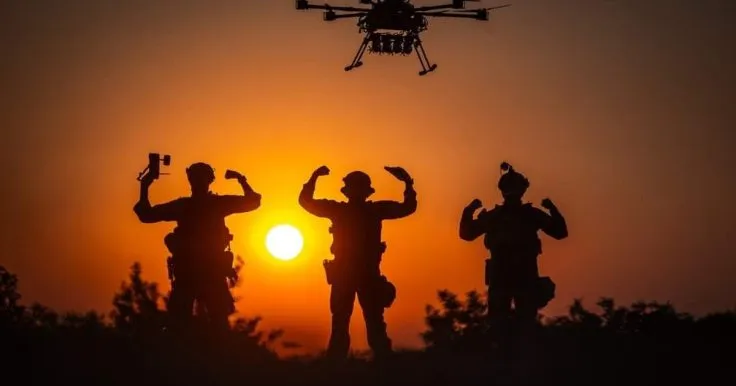
The Ukrainian Defense Forces have significantly intensified the use of strike drones, enhancing control over the logistical chains of Russian troops. Over the past two months, the units of drone operators have been substantially expanded, allowing the Ukrainian military to deliver systematic strikes along the entire front line.
This is reported by Finway
Ukrainian Drones Block Russia’s “Land Corridor”
At present, Ukrainian drones have a powerful impact on the rear positions of the Russian army up to a depth of 150 km. As a result, Russian occupiers are forced to acknowledge that the drones of the Armed Forces of Ukraine effectively control the so-called “land corridor” that connects Russia with the temporarily occupied territories of Luhansk, Donetsk, Zaporizhzhia, Kherson regions, and Crimea. This corridor was supposed to be a key logistical artery, but due to the actions of the Ukrainian military, Russian plans to improve logistics remain unrealized even in the fifth year of the war.
Scaling up strikes on the rear positions of the occupiers significantly complicates the supply of resources to their units. Special units of the Main Intelligence Directorate of the Ministry of Defense of Ukraine play a particular role in this, systematically striking transport hubs, warehouses, and convoys deep in enemy territory.
Main Intelligence Directorate Operations Inflict Critical Losses on Russians
Particular attention should be paid to the actions of the Main Intelligence Directorate’s special unit “Ghosts,” which conducted five targeted strikes on enemy cargo trains during their movement. As a result of the operation, locomotives transporting equipment and fuel tankers were destroyed. This led to a severe shortage of fuel and military equipment in the Russian army and disrupted the schedules of railway and maritime transport, making operational supply of reserves impossible.
“According to intercepted communications from the Main Intelligence Directorate, due to the destruction of supply channels by Ukrainian forces, Russian infantry remains without food and drinking water for weeks.”
Feeling serious logistical difficulties, the occupiers are forced to use longer, more dangerous, and more expensive routes, making their columns more vulnerable to strikes from drones and artillery of the Armed Forces of Ukraine. Furthermore, the scaled-up strikes on rear positions prevent the Russians from establishing warehouses for ammunition and fuel even up to 150 km from the front line. This significantly weakens the enemy’s combat capabilities and contributes to the retention of Ukrainian positions and successful counterattacks.
The last two months demonstrate the increasing effectiveness of the actions of the Ukrainian military, which is already affecting the overall course of hostilities and restraining Russia’s offensive plans.