

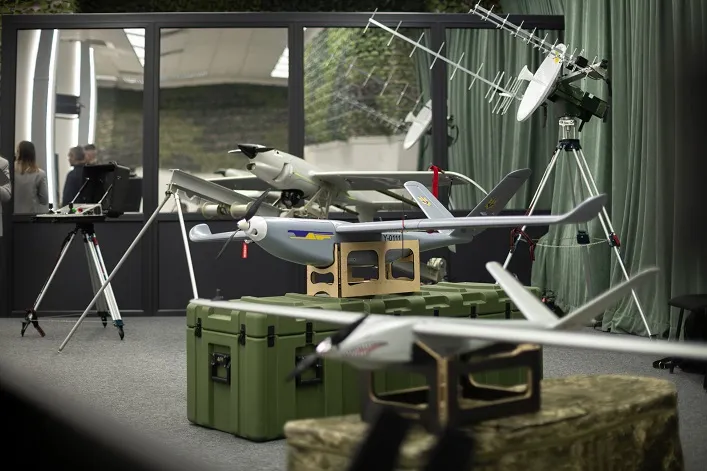
At the beginning of the full-scale war, Ukraine’s defense industry was able to meet only one-tenth of the needs of the Armed Forces, which necessitated a deep modernization of the sector. As a result of the sharp increase in demand, the army required innovative solutions, particularly in various types of drones, secure communication systems, modern battle management systems, and electronic warfare means.
This is reported by Finway
Mixed Model: Cooperation Between State and Private Business
Ukraine has developed a unique model of defense production where the state and private sectors operate in competitive cooperation. State enterprises, despite losing part of their production capacity, remain the foundation for the production of heavy weaponry and the implementation of strategic projects with long manufacturing cycles. The private sector, in turn, has demonstrated unprecedented technological breakthroughs, becoming a driver of rapid innovations in the defense sector.
Integration into the International Ecosystem and Industry Prospects
Dependence on international supplies has forced Ukraine to quickly harmonize its own standards with the requirements of partner countries, implement transparent supply coordination procedures, and integrate national producers into the global planning and logistics system. The state has also introduced regulatory and tax incentives for the accelerated development of production capacities.
Today, the Ukrainian defense technology ecosystem has become one of the most dynamic in Europe, uniting around 900 enterprises. It is projected that by 2026, the capacity of the defense industry could reach $60 billion.
“At the same time, according to President Volodymyr Zelensky, Ukraine currently does not have the capability to produce missiles for Western air defense systems (NASAMS, IRIS-T, Patriot) due to the lack of appropriate licenses.”