

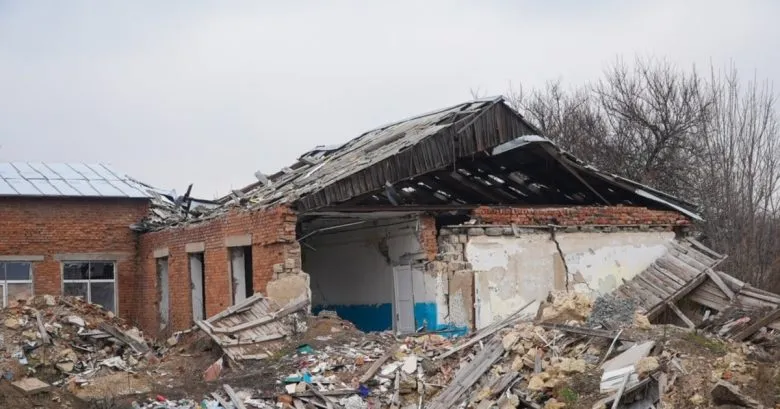
On the morning of March 2, the Russian Federation launched another attack on the Zaporizhzhia region, reported the head of the region, Ivan Fedorov. According to him, the occupiers struck the village of Komyshuvakha with guided aerial bombs. As a result of the shelling, a residential building was destroyed, and the shockwave and debris damaged neighboring structures.
This is reported by Finway
Civilians once again under fire
As a result of the attack, two girls aged 9 and 15 were injured. They were promptly provided with the necessary medical assistance.
“The injured are two girls – 9 and 15 years old. They have been given all the necessary medical assistance,” added Fedorov.
On the eve, in the city of Orikhiv, a Russian FPV drone attacked a civilian vehicle, resulting in injuries to a 67-year-old driver. According to the regional military administration, over the course of a day, the Russian army carried out 808 strikes on 39 settlements in the Zaporizhzhia region. Authorities received 34 reports of damage to residential buildings, vehicles, and infrastructure facilities.
Signs of genocide and the world’s reaction
Russian troops regularly attack Ukrainian cities with various types of weapons, including strike drones, missiles, guided aerial bombs, and multiple launch rocket systems. These shellings are aimed at destroying civilian infrastructure across Ukraine.
The Ukrainian authorities and international organizations classify such actions as war crimes of the Russian Federation and emphasize their targeted nature. In particular, attacks on the life-support systems of the population and healthcare facilities, which deprive people of electricity, heat, water supply, communication, and medical assistance, are considered signs of genocidal actions.
Legal experts, genocide researchers, and human rights defenders emphasize that during the large-scale war, Russia is committing all types of crimes against the citizens of Ukraine that fall under the definition of genocide. Among them are public calls for the destruction of Ukrainians, targeted shelling of infrastructure facilities, persecution of pro-Ukrainian individuals, deportation of children, destruction of cultural values, and attempts to alter the identity of children in occupied territories.
The Convention on the Prevention and Punishment of the Crime of Genocide, adopted by the UN General Assembly in 1948, obliges participating countries (currently 149) to prevent acts of genocide and punish those responsible, regardless of whether they occur during wartime or peacetime. According to this convention, genocide crimes include the intentional killing of members of a group, causing them serious bodily harm, creating unbearable living conditions, and the forcible transfer of children to other groups.
The leadership of Russia denies accusations of targeted strikes on civilian infrastructure and mass casualties among the peaceful population of Ukraine.