

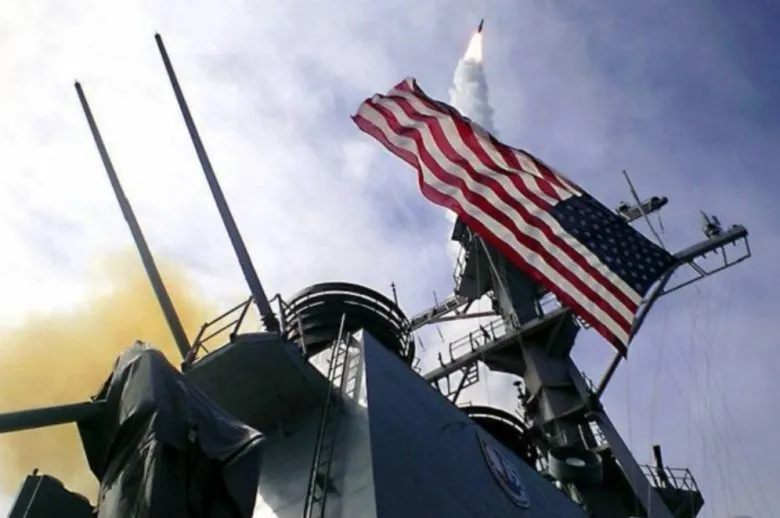
The White House is developing a plan for the largest expansion of military spending since World War II, initiated by US President Donald Trump. The administration has submitted a proposal to Congress to increase the defense budget to a record $1.5 trillion, which is intended to support the implementation of new technological programs. To fund this initiative, significant cuts are planned for social and environmental projects within the country.
This is reported by Finway
Structure and Priorities of the New Defense Budget
According to the White House plan, $1.1 trillion of the proposed funds will be allocated for discretionary Pentagon spending, while an additional $350 billion will be directed towards special investments in the development of the US defense industrial base. It is worth noting that these amounts do not include an additional $200 billion that the Pentagon has separately requested to continue military operations against Iran.
Particular attention is being paid to funding a new missile defense system with a multi-layered structure of sensors and interceptors on land, at sea, and in space, known as the “Iron Dome.” The administration plans to allocate $185 billion for its development. Significant resources are also earmarked for fleet modernization—the “Golden Fleet” project will receive $65.8 billion, allowing the US to catch up and surpass China in this area.
“The administration has referred to this as ‘cutting woke programs and waste.’
Cutbacks in Social and Environmental Programs
To ensure budget balance, it is proposed to cut non-military federal spending by approximately 10%, or $73 billion. This reduction will affect a number of climate, housing, and educational initiatives. During a closed meeting at the White House, President Trump stated that the role of the federal government should change: social programs such as childcare and Medicaid and Medicare health insurance should be funded from the budgets of individual states. At the same time, the federal government must focus its efforts on the military defense of the country.
Additionally, it is noted that the US is strengthening its tariff policy in the pharmaceutical sector, imposing tariffs of up to 100% on a number of medications.