

A new study has demonstrated the growing interest in using stablecoins in the banking sector, as well as an increasing demand for related services from financial institutions.
This is reported by Finway
- 77% of respondents are willing to create a crypto or stablecoin wallet in their banking or fintech app;
- 71% are interested in using a debit card linked to stablecoins;
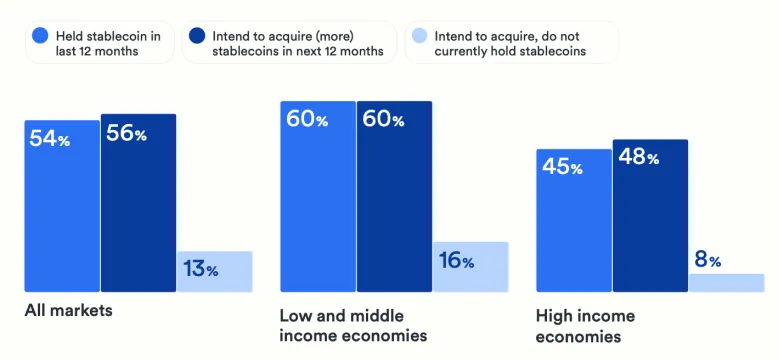
- 56% plan to purchase stablecoins within the next year;
- 54% have already owned such assets in the past 12 months;
- 13% are only planning to enter the digital currency segment.
The online survey was conducted from September to October 2025 among adults from 15 countries who are already using crypto assets or plan to do so. The results indicate that the majority of users see a place for stablecoins in traditional banking, and their trust in this financial instrument is increasing.

Stablecoins Becoming Part of Global Financial Processes
In 2025, the market capitalization of stablecoins increased by 50% and for the first time exceeded $300 billion, highlighting their gradual integration into traditional financial structures. A significant portion of users desires stablecoins to have the same properties as conventional money.
“Users want stablecoins to behave like the money they already know.”
The main reasons for the popularity of stablecoins are lower fees (30%), increased security (28%), and global accessibility (27%). At the same time, users point to the complexity of the usage process, the large number of steps, the choice of networks, and the irreversibility of transactions. This increases the demand for simple and understandable banking solutions for working with digital assets.
The Impact of Stablecoins on Income and International Transactions
Stablecoins already account for a significant portion of users’ income—on average, 35% of annual earnings. 73% of freelancers and contractors noted that working with international clients has become easier, and three out of four users reported improved opportunities for conducting global business. Over the past year, about half of the owners have increased their holdings of stablecoins, and this trend is intensifying.
Regional analysis shows the highest share of digital currency usage in low- and middle-income countries (60%), as well as in Africa (up to 79%). In high-income countries, this figure stands at 45%.
Regulatory Clarity — The Key to Integrating Stablecoins into the Banking System
Experts emphasize that further growth in the stablecoin market depends on transparent regulation. In particular, in the U.S., the GENIUS Act is being considered, which aims to establish standards for transparency and cybersecurity for digital assets. A report by Coinbase states:
“By establishing standards for transparency and cybersecurity, this act classifies these assets as reliable equivalents of cash.”
Company representatives also emphasize that this will promote institutional trust and consumer protection, which they believe will lead to the widespread adoption of stablecoins in the coming years.
It is worth noting that, according to Gate CEO Lin Hania, traditional banks have already ceded to stablecoins in the competition for the status of modern payment technology.