

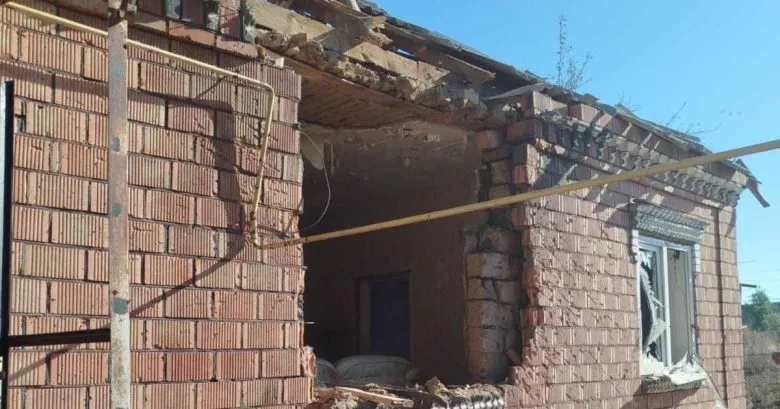
Throughout the day, the Russian army carried out over 30 attacks with drones and artillery on the Dnipropetrovsk region. This was reported by the head of the regional military administration, Oleksandr Hanzha. The enemy shelling affected three districts of the region, resulting in injuries to two people and significant destruction.
This is reported by Finway
Widespread Destruction and Casualties
In the Nikopol district, the district center, as well as the Pokrovsk, Marhanets, Myrivka, and Chervonohryhorivka communities came under fire. As a result of the strikes, businesses and private homes were damaged. One of the injured is a 58-year-old man who was hospitalized in serious condition.
“Damaged businesses and private homes. A 58-year-old man is injured. He is in the hospital in serious condition,” Hanzha stated.
In the Verkhovtsivka community of the Kamianske district, the shelling led to the destruction of infrastructure. A 44-year-old man was injured here and taken to the hospital with moderate injuries.
In the Kryvyi Rih district, Russian forces shelled residential buildings, a shop, and a car in the Hrushevska and Zelenodolsk communities. As a result, the property of local residents was damaged.
Targeted Attacks as a Sign of Genocide
Russian military regularly use various types of weapons: strike drones, missiles, aerial bombs, and multiple launch rocket systems to attack Ukrainian cities and civilian infrastructure. Ukrainian authorities and international organizations classify these actions as war crimes of the Russian Federation, emphasizing their deliberate nature.
Shelling of vital infrastructure and healthcare facilities, aimed at depriving people of electricity, heat, water supply, communication, and medical assistance, exhibits signs of genocidal actions according to the conclusions of human rights defenders, genocide researchers, and lawyers. In particular, the Russian leadership has repeatedly publicly denied the existence of the Ukrainian nation, called for the destruction of Ukrainians, and carried out actions aimed at changing the identity of children in occupied territories, destroying Ukrainian culture, and persecuting pro-Ukrainian citizens.
According to the UN Convention on the Prevention and Punishment of the Crime of Genocide, adopted in 1948 and having 149 participants, such actions fall under the definition of genocide. Genocide includes killings, causing serious bodily harm, creating conditions intended for the physical destruction of a national, ethnic, or religious group, as well as the forcible transfer of children and incitement to commit such crimes.
Despite numerous evidences, the Russian leadership denies the fact of targeted strikes on civilian objects in Ukraine, including hospitals, schools, kindergartens, and energy and water supply systems.