

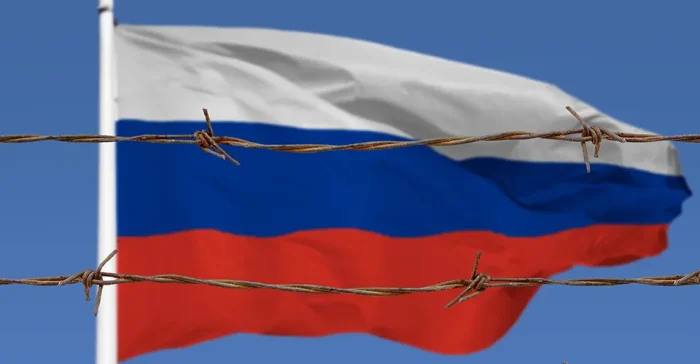
The economic situation in the Russian Federation is deteriorating under the influence of the protracted war against Ukraine and constant strikes on critical infrastructure, negatively affecting the pace of development. Against this backdrop, Vladimir Putin opens the St. Petersburg International Economic Forum, seeking new solutions to restore economic growth.
This is reported by Finway
Declining growth rates and the impact of Ukrainian attacks
The economy of the Russian Federation, with a total volume estimated at approximately $3 trillion and significantly dependent on raw material exports, has sharply lost its pace of development. While growth was 4.9% in 2024, it dropped to 1% last year. In the first quarter of 2026, GDP contracted by 0.2%, which, according to the authorities, is a result of high interest rates, Western sanctions, and a “strong” ruble. The current growth forecast for the economy this year is about 0.4%.
Ukrainian drone attacks on oil refineries, fertilizer production, and ports have led to the shutdown of a quarter of the oil refining sector’s capacity and created a risk of fuel shortages precisely during a period of increased demand.
Ways to overcome the crisis: business calls for an end to the war
Putin has already instructed his subordinates to develop mechanisms to stimulate economic growth; however, business representatives believe that the most effective way would be to de-escalate the war. At the same time, the Kremlin has reported that peace negotiations, which began last February, are currently suspended due to the U.S. focus on the war in the Middle East.
Potential investments from the U.S. are also on hold, and the discussed easing of Western sanctions remains in question, further exacerbating pessimistic sentiments among entrepreneurs.
Some representatives of the Russian elite have tried to warn Putin about the economic consequences of the war. In particular, Kirill Dmitriev, responsible for the Kremlin’s contacts with the administration of U.S. President Donald Trump, notes the potential economic benefits of a peace agreement.
“The government has virtually nothing to offer for restoring growth,” said Oleg Vyugin, former deputy head of the central bank.
According to him, under conditions of high key interest rates, increased taxes to finance the war, and declining investments, achieving economic growth will be difficult. The stability factors that Russia relied on for many years – foreign investments and revenues from energy resources – no longer play a key role or have exhausted their potential.
Delegates at the St. Petersburg forum are discussing strategies such as reallocating labor to rapidly growing sectors and developing digital platforms based on artificial intelligence in e-commerce and banking. The authorities are pinning hopes on the growth of domestic consumer demand.
Anton Tabakh, an economist at the rating agency “Expert RA,” questions the possibility of growth under current circumstances: if consumers do not increase spending, investments are declining for the second consecutive year, and fiscal policy does not stimulate development.
A temporary increase in oil prices, Russia’s main export commodity, due to the Middle Eastern conflict has provided some relief, but experts expect this phenomenon to be short-lived.
Despite predictions of collapse, the Russian economy has shown some resilience to sanctions due to the ramping up of military production. At the same time, according to Siberian deputy Renat Suleymanov, the economy will not withstand a protracted war.
He emphasized that the production of tanks and shells has no consumer value for the population, and the economy is operating for military needs, which does not contribute to development.
Experts stress that Russia lacks internal growth drivers similar to those of India or China and may remain in a state of stagnation until an external catalyst appears, such as the easing of sanctions.
Mikhail Matvienko, a representative of Sberbank, stated that the economy needs an external push, which should not be expected from either the state budget or the banking system.