

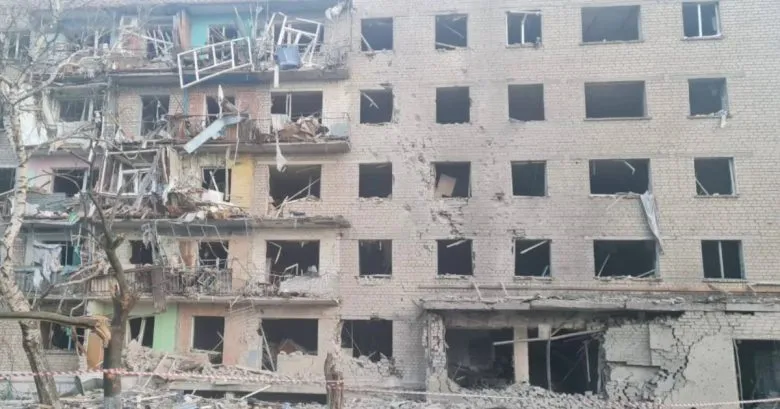
As a result of massive Russian attacks over the past day in the Kharkiv region, civilians have been affected and significant damage to civilian infrastructure has been recorded. The head of the region, Oleg Synegubov, reported that 18 settlements were hit by shelling.
This is reported by Finway
Casualties and Injuries Among Civilians
As a result of a strike on the village of Kivsharivka in the Kupiansk community, a 67-year-old woman was killed, and another local resident, a 62-year-old man, was injured. On the highway near the village of Chornoglaivka in the Zolochiv community, two men aged 42 and 61 were injured. Medical personnel also provided assistance to an 84-year-old woman who was wounded on March 30 in the village of Prykolotne in the Velykoburlutsk community.
Additionally, Russian shelling has led to damage to civilian infrastructure in the Bohodukhiv, Kupiansk, Izium, and Kharkiv districts of the region.
Shelling in Other Regions and Signs of Genocidal Actions
The Sumy region continues to suffer losses as well: a 33-year-old woman was injured in the Sumy community. In Donetsk, according to the head of the region, Vadym Filashkin, six people were injured over the day: three in Oleksiyivka-Druzhkivka, and one each in Sloviansk, Mykolaivka, and Bilenke.
Russian troops systematically use various types of weaponry – strike drones, missiles, aerial bombs, and multiple rocket launch systems – to attack cities and villages in Ukraine, resulting in numerous destructions and casualties among the civilian population.
“In the village of Kivsharivka in the Kupiansk community, a 67-year-old woman was killed, and a 62-year-old man was injured; on the highway near the village of Chornoglaivka in the Zolochiv community, a 42-year-old and a 61-year-old man were injured,” he stated.
Such actions are regarded by the international community and Ukrainian authorities as war crimes, emphasizing their targeted nature. There is particular concern regarding attacks on life-support systems – electricity, water supply, heating, and medical institutions – which are indicative of genocidal actions under international law.
Human rights defenders and genocide researchers emphasize that Russia is committing various crimes during the large-scale war that may fall under the definition of genocide, including public calls for the destruction of Ukrainians, persecution of citizens with pro-Ukrainian positions, deportation of children, and the deliberate destruction of cultural and educational sites.
The UN Convention on the Prevention and Punishment of the Crime of Genocide from 1948 defines such actions as genocide if they are aimed at the destruction of a national or ethnic group in whole or in part. Currently, the participating countries of the Convention, which number 149, bear the responsibility to prevent genocide and prosecute those guilty of such crimes regardless of the time – during war or in peacetime.
The leadership of Russia continues to deny the facts of targeted strikes on the civilian infrastructure of Ukrainian cities and villages, despite numerous evidence of deaths and injuries among the civilian population, as well as the destruction of healthcare, education, and energy facilities.