

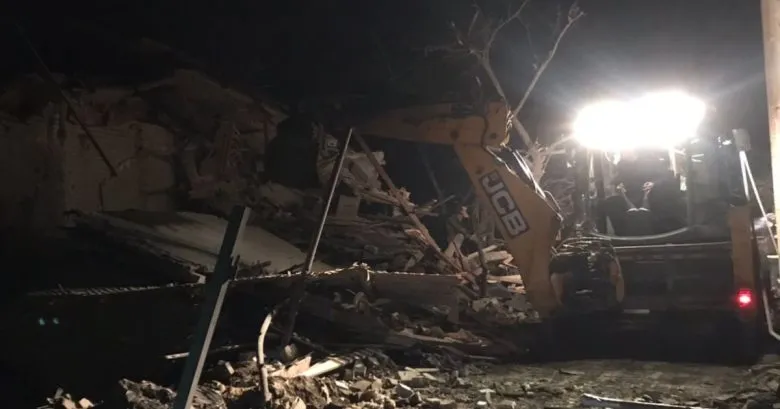
Russian forces carried out an airstrike on the city of Sloviansk, resulting in damage to dozens of residential buildings and the death of one person. According to the State Emergency Service, 63 private homes were damaged by the explosions, and residents were trapped under the rubble of two of them.
This is reported by Finway
Consequences of the Shelling and Rescue Operation
Rescuers quickly conducted emergency rescue operations at the strike site.
“During the emergency rescue operations, rescuers freed a woman and handed her over to the paramedics. Unfortunately, another person was found without signs of life,” stated the State Emergency Service.
A fire that broke out due to the airstrike was also extinguished.
According to preliminary information from the regional authorities, another person was killed and five were injured in the Russian attacks in Donetsk region the day before.
Russian Attacks and International Reaction
Russian military forces regularly strike Ukrainian cities and civilian infrastructure, using various types of weaponry — strike drones, missiles, aerial bombs, and multiple launch rocket systems. Such attacks are recorded in all regions of Ukraine.
The Ukrainian authorities and international organizations classify these shellings as war crimes of the Russian Federation, emphasizing their deliberate nature. They stress that attacks on systems essential for the population’s survival and healthcare facilities, which result in depriving people of electricity, heat, water, communication, and medical assistance, are signs of genocidal actions.
Human rights defenders and genocide researchers note that during the full-scale war, Russia is committing all types of crimes that may fall under the definition of genocide. Among them are public calls for the destruction of Ukrainians, targeted shelling of essential infrastructure, persecution of individuals with pro-Ukrainian positions in occupied territories, extermination of the Ukrainian intelligentsia, deportation of children, and destruction of cultural heritage.
The Convention on the Prevention and Punishment of the Crime of Genocide, adopted by the UN in 1948, obliges the participating countries, currently numbering 149, to prevent genocide and punish those guilty of committing it both in peacetime and during war. According to the Convention’s definition, genocide is actions aimed at the complete or partial destruction of a national, ethnic, racial, or religious group, including through killings, causing serious bodily harm, creating conditions for the destruction of the group, preventing births, and forcibly transferring children from one group to another, as well as public incitement to such actions.
The Russian leadership denies accusations of targeted strikes on civilian infrastructure, rejecting facts of civilian casualties and the destruction of socially important facilities, including hospitals, schools, kindergartens, and energy and water supply networks.