

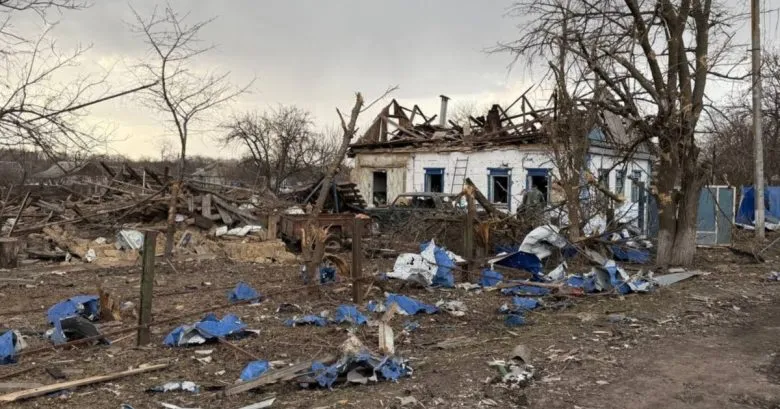
Over the course of a day, the Russian Federation’s forces carried out nearly 50 attacks in the Dnipropetrovsk region, using strike drones and artillery. This was reported by the head of the Dnipropetrovsk Regional State Administration, Oleksandr Hanzha.
This is reported by Finway
Consequences of shelling in the regions
According to official information, three districts were affected by the attacks: Nikopol, Synelnykove, and Kryvyi Rih. A total of five people were injured, including a child. Significant damage was inflicted on civilian infrastructure and residential buildings.
In the Nikopol district, a hair salon, a store, a gas station, vehicles, as well as apartment buildings and private houses were damaged.
“A 58-year-old man was hospitalized in serious condition. An 11-year-old girl, a 50-year-old woman, and a 45-year-old man will receive outpatient treatment,” Hanzha reported.
In the Pokrov community of the Synelnykove district, destruction of private houses was recorded. A 37-year-old man was injured and hospitalized in serious condition. As a result of the shelling in the Kryvyi Rih district, infrastructure facilities were also damaged.
Targeted nature of the attacks
Russian military forces systematically strike Ukrainian cities and civilian infrastructure using various types of weapons: kamikaze drones, missiles, aerial bombs, and multiple launch rocket systems. According to assessments by Ukrainian authorities and international organizations, such actions exhibit signs of war crimes and are carried out deliberately.
Shelling of life-support systems, medical institutions, and educational establishments aimed at depriving the population of electricity, heat, water, communication, and medical assistance is viewed by human rights defenders as genocidal actions. In particular, Russian officials have repeatedly publicly stated their intentions to destroy Ukrainians as a nation, which falls under the definition of genocide according to international law.
The Convention on the Prevention and Punishment of the Crime of Genocide, adopted by the UN in 1948, obliges member states to prevent genocide and punish it even in peacetime. Genocide is defined as actions intended to completely or partially destroy a national, ethnic, racial, or religious group through killing, causing physical and mental suffering, creating living conditions aimed at the destruction of the group, and other criminal acts.
Despite numerous evidence, the leadership of Russia denies strikes on civilian infrastructure, casualties among the civilian population, and the destruction of facilities vital for the lives of Ukrainians.