

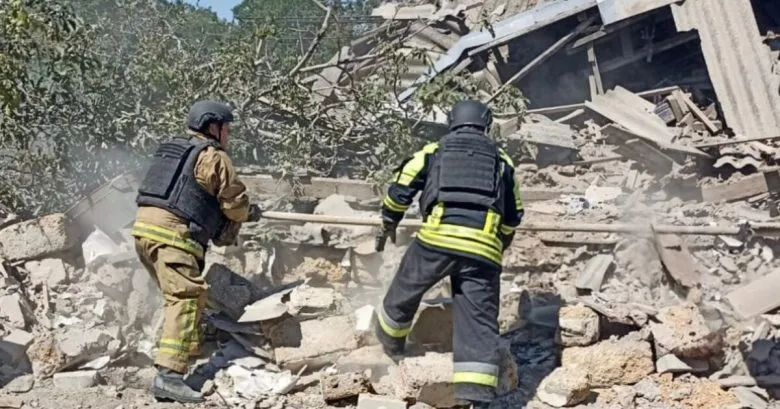
A 76-year-old resident of the village of Daryivka in the Kherson region has died from severe injuries sustained during a Russian drone attack at the end of March. Medical staff fought for his life for over ten days, but the injuries proved fatal, as reported by the head of the regional military administration, Oleksandr Prokudin.
This is reported by Finway
Russian strikes on the civilian population of Kherson region
According to officials, on March 31, a Russian drone struck Daryivka, resulting in injuries to a local resident who later died in the hospital. Additionally, the head of the Kherson city military administration, Yaroslav Shanko, reported a nighttime shelling of the village of Inzhenerne by “Molniya” type drones. During this attack, one person was injured, and three five-story residential buildings were damaged.
Shelling of infrastructure and the qualification of Russia’s actions
The Russian Federation continues to systematically attack cities and villages in Ukraine using various types of weaponry: strike drones, missiles, guided aerial bombs, and multiple launch rocket systems. As a result of these actions, civilian infrastructure, energy facilities, hospitals, schools, and residential buildings are suffering.
The Ukrainian authorities, in cooperation with international organizations, classify these attacks as war crimes committed by the Russian Federation and emphasize their targeted nature. It is particularly highlighted that the shelling of life-support systems, including energy, water supply, and medical facilities, exhibits signs of genocide.
“Medical staff fought for the life of the 76-year-old local resident for over ten days. Unfortunately, the injuries were fatal,” Prokudin reported.
In international law, genocide is defined as actions aimed at fully or partially destroying a national, ethnic, racial, or religious group. Signs of genocide include killings, infliction of serious bodily harm, intentional creation of conditions leading to the destruction of the group, as well as the forcible transfer of children or prevention of childbirth.
The UN Convention on the Prevention and Punishment of the Crime of Genocide, adopted in 1948, obligates 149 member countries to prevent acts of genocide and hold accountable those responsible during both wartime and peacetime.
Despite numerous pieces of evidence, the leadership of Russia denies strikes on the civilian population and infrastructure of Ukraine, despite regular destruction of hospitals, schools, residential buildings, energy, and water supply facilities as a result of shelling.