

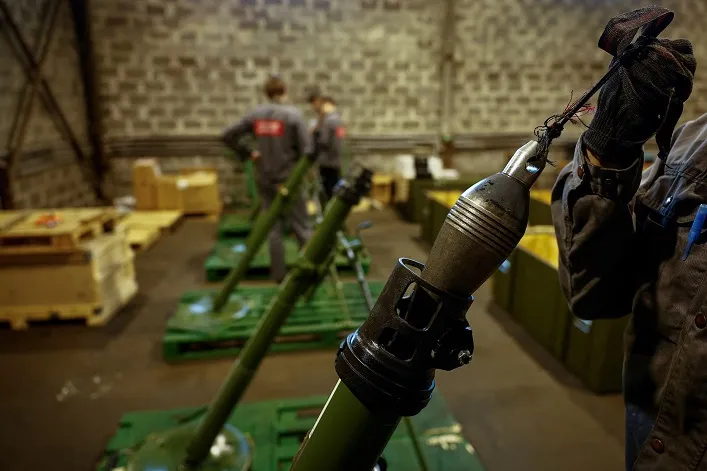
The European Union has prepared a new credit instrument for Ukraine that allows for the purchase of Ukrainian weapons. This was noted by the EU Ambassador to Ukraine, Katarina Mathernova, who emphasized that this approach is innovative for cooperation between Kyiv and Brussels.
This is reported by Finway
Features of the New Loan and Its Advantages
According to Mathernova, the priority remains on purchases from EU member states. However, the loan also allows for financing purchases from third countries, including the USA, if the necessary weapons or their components are unavailable in Europe or not produced in Ukraine. The ambassador highlighted that compared to the SAFE mechanism, which operates for EU members, the new loan is more advantageous for Ukraine as it is provided directly to the Ukrainian state.
“SAFE is an instrument for member states, and for Ukraine, it is only indirect. But within the framework of this loan, it is an instrument specifically for Ukraine. So in this sense, it is even better than SAFE. This is money for Ukraine, not money for member states to cooperate with Ukraine,” the ambassador noted.
Requirements for Obtaining the Loan and Its Significance for Ukraine
Mathernova stressed that the approval of the EU loan is crucial for agreeing on a new IMF program, as it depends on ensuring Ukraine’s financial stability. She also stated that the EU loan is a clear signal to Russia that the European Union supports Ukraine not only in the military sphere but also in the functioning of state institutions and the economy. At the same time, as the ambassador emphasized, the repayment of the loan will only be possible if reparations are paid to Ukraine by Russia.
The head of the Budget Committee of the Verkhovna Rada, Roksolana Pidlasa, clarified that for Ukraine to obtain the loan, it must strengthen its fight against corruption, guarantee transparency in public finances, and reinforce the rule of law. All these conditions will be enshrined in a Memorandum of Understanding between the European Commission and the Ukrainian government. The annual funding volume will be determined according to the needs submitted to Brussels under the Ukrainian Financing Strategy. The final decision on the allocation of funds will be made by the EU Council and the European Parliament.