

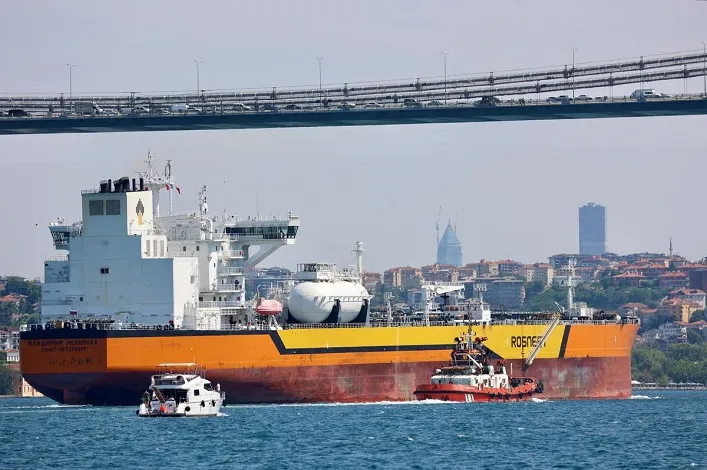
The US is urging the G7 countries to impose significantly increased tariffs on imports from China and India. The reason for this move is the purchase of Russian oil by these countries, which, according to Washington, finances the military aggression of the Russian Federation against Ukraine. The American side proposes setting tariffs at 50-100% to intensify economic pressure on Moscow and encourage it to engage in peace negotiations.
This is reported by Finway
EU’s Position and Potential Economic Consequences
European officials warn that such high tariffs on Chinese and Indian goods could lead to serious economic consequences and provoke corresponding countermeasures from Beijing and New Delhi. Instead of tariffs, the EU suggests strengthening sanctions against Russian energy companies and advancing the planned phase-out of Russian energy imports, currently scheduled for 2027. This also requires influencing the positions of Hungary and Slovakia. Additionally, the European Commission is discussing the possibility of imposing separate sanctions against China due to its advantageous purchases of Russian energy resources.
India’s Reaction and Increase in Russian Gas Supplies to China
India’s largest private port operator, Adani Group, has announced a ban on the entry of all tankers under Western sanctions into its ports. This decision, affecting 14 ports, aims to limit the supply of oil transported by the so-called Russian “shadow fleet” to Indian refineries.
At the same time, China continues to actively import Russian liquefied natural gas (LNG) from the sanctioned Arctic LNG 2 project. Last week, the sanctioned tanker Zarya delivered its third batch of over 160,000 cubic meters of LNG to the Beihai LNG terminal in southern China. Two more gas carriers, each with 174,000 cubic meters, were already en route to the same terminal.
In the US, Europe, and Ukraine, it is believed that China has leverage over Putin and can facilitate the start of peace negotiations regarding Ukraine. US Special Representative for Ukraine, Keith Kellogg, noted at the annual YES meeting in Kyiv:
“A complete cessation of support for Russia from China could lead to a swift end to Russian aggression against Ukraine.”
Ukrainian President Volodymyr Zelensky also emphasized that China has sufficient influence to end the war; however, the world currently does not observe Beijing’s readiness to leverage this potential.