

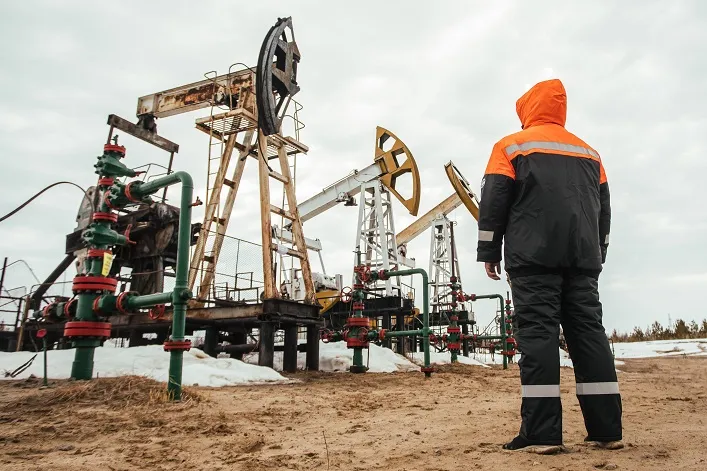
In December of last year, oil production in the Russian Federation showed its first significant decline in the last year and a half. During this month, the average daily oil production was 9.33 million barrels, which is over 100,000 barrels less than in November and nearly 250,000 barrels below the established quota under the OPEC+ agreement (9.57 million barrels per day). Prior to December, Russia had been increasing production, but new factors led to a change in dynamics.
This is reported by Finway
Reasons for the Decline in Oil Production in Russia
Experts link the decrease in production to large-scale attacks by Ukrainian drones on key oil infrastructure in Russia. In particular, on January 10, a fire broke out at an oil depot in the Volgograd region following a drone strike. Additionally, for the first time since the beginning of the full-scale invasion, Ukraine attacked oil fields in the Caspian Sea, as well as tankers transporting oil from Russia. Another important factor was the tightening of sanctions by the United States, which led traditional importers to begin refusing to purchase Russian oil.
Experts attribute the decline in production both to large-scale attacks by Ukrainian drones on Russian oil infrastructure and facilities (as a result of the latest such attack on January 10, a fire broke out at an oil depot in the Volgograd region of Russia) and to the reluctance of some traditional global importers to buy Russian oil following U.S. sanctions.
Decrease in Energy Resource Exports to China
Additional pressure on the energy sector in Russia was caused by a reduction in trade with China. In the 11 months of last year, Chinese purchases of Russian oil decreased by 7.6% to 91.5 million tons. The value of exports fell by 20%. China’s imports of oil products decreased by 3% for light distillates and by 33% for heavy ones, while in monetary terms, these figures dropped by 33% and 40% respectively.
The physical export of coal to China decreased by 11% to 72.4 million tons, and the value volume fell by 29% to $6.9 billion. Despite a 12% increase in the physical export of liquefied gas, this figure decreased by 1.8% in monetary terms. For the first time since the beginning of the full-scale war, there has also been a reduction in the supply of Chinese goods to Russia — by 11.8%, to $91.7 billion for January-November.