

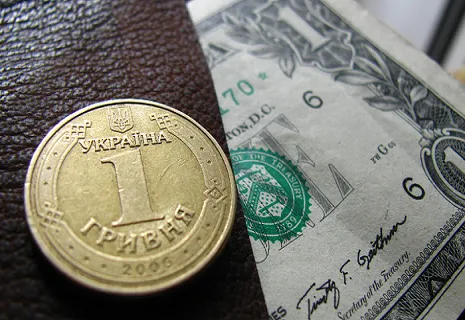
The demand for foreign currency, primarily US dollars, among the population of Ukraine remains significantly lower than last year’s figures. Despite moderate growth, the current net demand for currency stands at about $270–280 million per month, which is four times less than in August–September 2024, when this figure reached $1 billion.
This is reported by Finway
Main Factors Behind the Decrease in Currency Demand
First Deputy Head of the National Bank of Ukraine Serhiy Nikolaychuk explained that this decline in demand is attributed to Ukrainians shifting towards savings in hryvnias. According to him, the NBU’s policy aimed at enhancing the attractiveness of hryvnia assets plays a key role in this shift.
“The NBU does not provide investment advice,” but calls on people to “trust the national currency.”
The regulator also notes that this year, a sharp increase in demand for foreign currency is not expected, even considering seasonal trends. Unlike 2024, when the surge was driven by pent-up demand due to previous currency restrictions, the market is currently saturated. Additionally, Ukrainians are increasingly realizing that hryvnia instruments can provide stable and attractive returns, while storing currency “under the mattress” yields no profit and is risky.
An important factor has also been the dynamics of deposit rates: rates on foreign currency deposits have fallen to a minimum, often to 1% or lower, significantly reducing their attractiveness compared to hryvnia deposits.
Experts’ Advice on Investing Savings
Banking and financial experts recommend that Ukrainians pay attention to hryvnia deposits and domestic government bonds (OVDP). At the same time, they advise not to completely abandon storing part of their savings in foreign currency, but to apply diversification principles.
Financial analyst Oleksiy Kozyrev suggests allocating investments as follows:
- 50% — in hryvnia instruments with fixed income (deposits, OVDP, bonds of the largest issuers);
- 40% — in real estate and land (of which 80% in residential real estate, 20% in land or commercial real estate);
- up to 20% — in the stock market;
- up to 5–7% — in gold or silver;
- up to 3–5% — in cryptocurrencies (if desired); if there is no risk appetite, this portion can be directed to gold as a safe-haven asset.
Overall, experts emphasize that wisely allocating funds across different instruments allows for risk reduction and ensures stable income, while the hryvnia remains attractive for savings in 2025.