

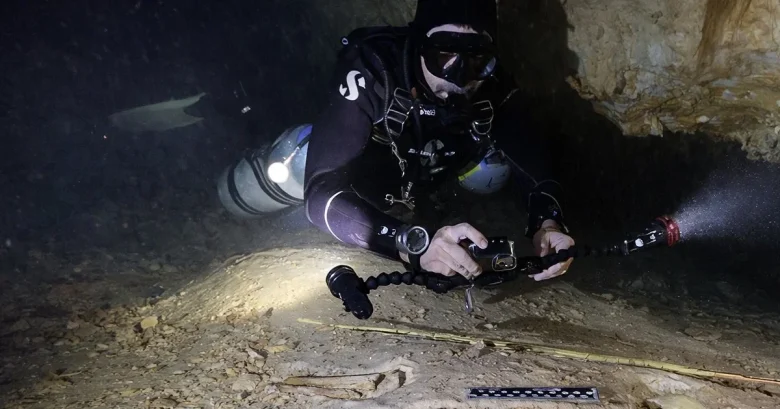
In the Mexican state of Quintana Roo, a team of archaeologists made a unique discovery — fossilized human remains were found in the complex system of underground rivers known as Sac Actun, opening new chapters in the study of early life in present-day Mexico. The discovered remains have been transferred to the National Institute of Anthropology and History in Mexico City for further research.
This is reported by Finway
Details of the discovery and scientific analysis
As reported by Culture Minister Claudia Curiel de Icaza, the transportation and study of these remains will allow for an important step forward in understanding the lives of the region’s first inhabitants.
“The transportation and study of these human remains will be an important step forward in understanding the first inhabitants of our country”
The research is overseen by archaeologist Arturo Talavera Gonzalez. According to him, approximately 40% of the skeleton was found on site: fragments of the skull, ribs, vertebrae, clavicle, right scapula, parts of the femur, as well as long bones of the upper and lower limbs. The discovered anatomical features, such as the mastoid process and frontal bone above the eye sockets, helped determine the sex of the individual — a male aged 20–25 at the time of death and standing between 1.45 and 1.50 m tall.
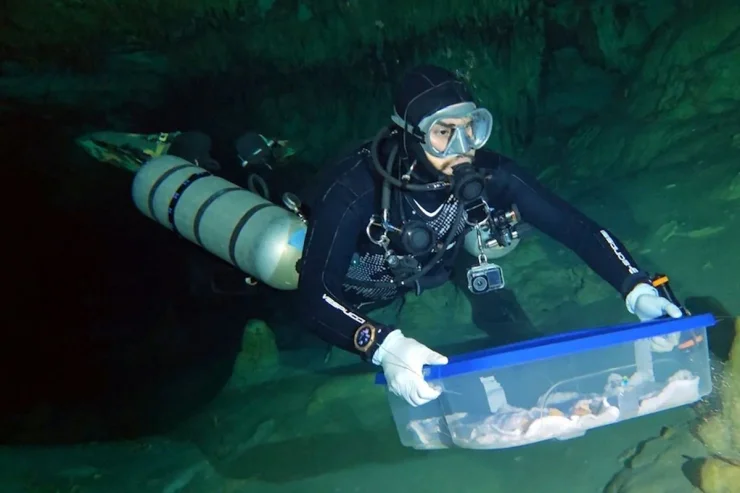
Archaeological context and significance of the discovery
The skeleton was found at a depth of approximately 200 meters from the entrance to the cenote, deep within the cave system. Alongside the remains, researchers discovered charcoal remnants, indicating human activity in this location. It is likely that the cave served as a refuge or a site for rituals 8,000–10,000 years ago.
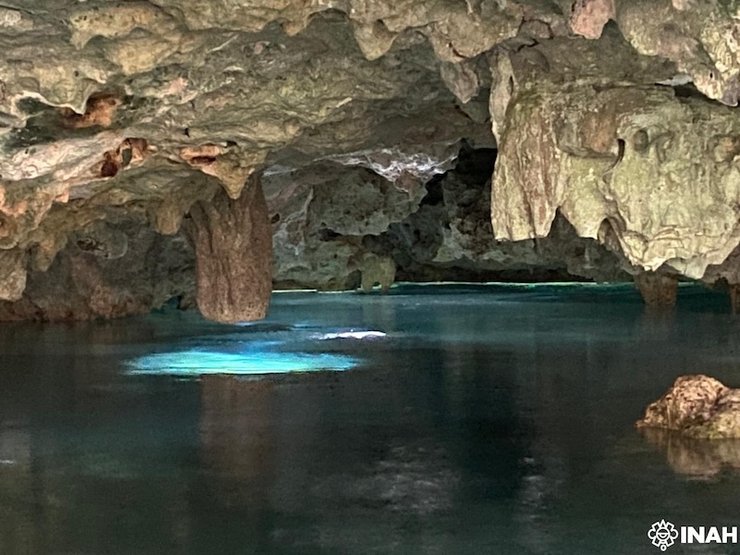
According to Gonzalez, at that time, the Yucatan Peninsula was covered with grasslands, shrubs, and inhabited by megafauna, with sea levels significantly lower. People used dry caves as shelters and sometimes as natural burial crypts. The findings indicate the existence of ancient beliefs and specific burial rituals among the inhabitants of that period.
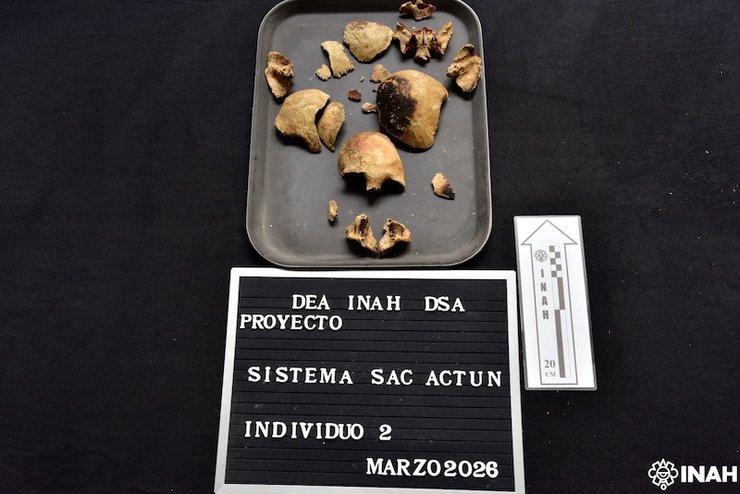
This discovery allows for a deeper understanding of how ancient people inhabited the region, moved about, and approached burials. The analysis of such findings supports theories regarding migration processes, survival strategies, and cultural traditions in prehistoric times, which is an important contribution to science and the history of humanity.