

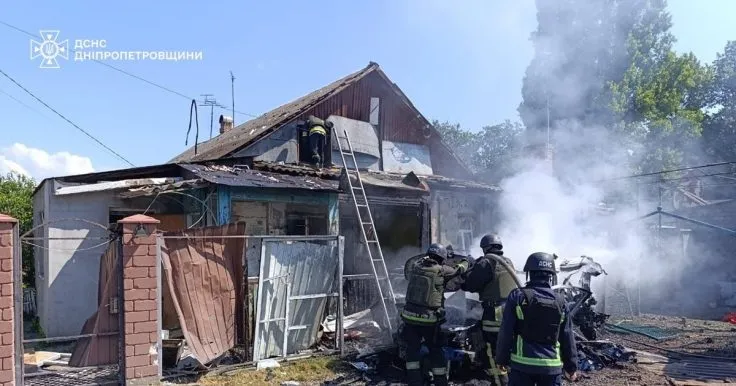
In the Dnipropetrovsk region, mandatory evacuation of residents from certain areas of the Nikopol district has been implemented. This was reported by the head of the regional military administration, Oleksandr Hanzha, who signed the relevant orders.
This is reported by Finway
Which areas are subject to evacuation
The evacuation concerns families with children from Novokyivka and Illinka of the Marhanets city community, as well as Vyshhetarasivka of the Myrivska rural community. According to Hanzha, there are currently 34 children from 28 families living in these settlements.
“Families with children from Novokyivka and Illinka of the Marhanets city community, Vyshhetarasivka of the Myrivska rural community must leave. Currently, there are 34 children living there. This is 28 families.”
Additionally, all residents of one street in Marhanets and nearly a hundred streets in Nikopol must also leave their homes. In total, 1,145 people are subject to evacuation. The evacuation is to take place within a month, and the time and route are agreed upon individually with each family.
Evacuation conditions and assistance for displaced persons
Oleksandr Hanzha clarified that evacuees can temporarily reside in safer settlements in Nikopol region, other areas of the region, or even outside its borders. The city authorities of Nikopol are considering the possibility of compensating rent for housing for families with children who, having been subject to mandatory evacuation, decided to stay in the city but moved to safer areas.
The necessity for evacuation arose due to constant shelling by the Russian army, which strikes the Nikopol district almost daily, including the district center.
Russian troops regularly attack Ukrainian cities and civilian infrastructure using strike drones, missiles, aviation bombs, and multiple launch rocket systems. Such strikes on life-support systems and medical facilities are regarded by Ukraine and international organizations as war crimes of the Russian Federation and deliberate actions.
Shelling aimed at destroying energy, water supply, communication, and other key infrastructures is referred to by experts as a sign of genocidal actions. Legal experts, genocide researchers, and human rights defenders point out that during the large-scale war, Russia commits crimes against the citizens of Ukraine that may meet the legal definition of genocide. These include:
- public statements by the Russian leadership denying the existence of the Ukrainian people;
- calls for the destruction of Ukrainians as a nation;
- targeted shelling of residential areas and critical infrastructure;
- persecution of people with pro-Ukrainian positions in occupied territories;
- destruction of the intelligentsia and carriers of Ukrainian culture;
- implementation of a education system in occupied territories aimed at changing the identity of children;
- deportation of children to Russia;
- destruction of Ukrainian books, theft of cultural values, and artifacts.
The Convention on the Prevention and Punishment of the Crime of Genocide, adopted by the UN General Assembly in 1948, defines genocide as acts aimed at the complete or partial destruction of a national, ethnic, racial, or religious group. Currently, 149 countries are parties to this Convention and are obligated to prevent acts of genocide and punish them in both peacetime and wartime.
The leadership of Russia denies that its army deliberately targets civilian infrastructure; however, the facts of mass destruction and casualties among the civilian population remain undeniable.