

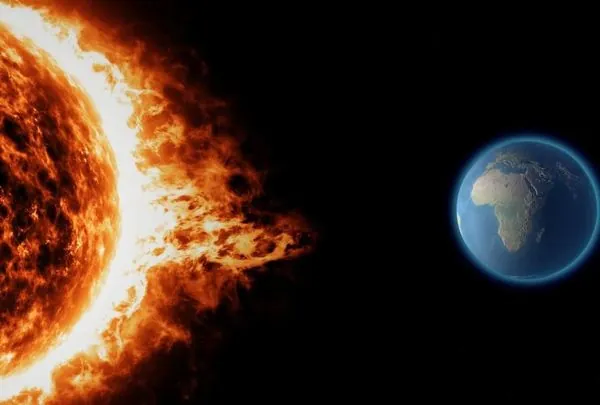
On January 28, a yellow-level magnetic storm is expected on Earth, which may affect both people’s well-being and the operation of technical systems.
This is reported by Finway
Solar Activity Forecast for January 28
According to the NOAA Space Weather Prediction Center, an increase in solar activity to a K-index of 4.7 is forecasted for Sunday, January 28. This level corresponds to a storm of medium intensity and is classified as a yellow level of danger. During this period, people sensitive to weather changes may experience a deterioration in well-being, including headaches, increased fatigue, irritability, and decreased concentration.
“Magnetic storms can affect atmospheric pressure, causing some individuals to experience a decline in well-being, leading to headaches, increased fatigue, irritability, and stress.”
What Are the Dangers of Magnetic Storms and How Do They Occur?
Magnetic storms occur as a result of solar flares and explosions on the Sun, when a powerful stream of charged particles—protons and electrons—is ejected into space. When these particles reach the Earth’s magnetosphere, they disturb the planet’s magnetic field.
The K-index is used to measure the strength of magnetic storms. Values from 1 to 4 are considered minor and rarely affect health or technology. However, storms with a K-index of 5 and above have a “red” level and can cause disruptions in satellite operations, mobile communications, radio frequencies, and navigation systems. At very high values (7–8), polar lights may even occur.
Since data on solar activity is updated every three hours, experts recommend regularly monitoring current space weather forecasts to respond promptly to changes.