

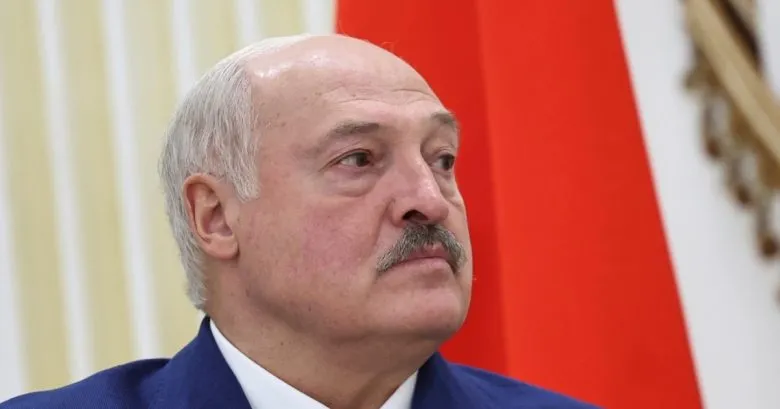
The Ukrainian Foreign Intelligence Service reported that Belarusian leader Alexander Lukashenko has significantly increased pressure on the country’s banking sector in search of additional financial resources to support the national economy. This move is a response to the deepening economic problems in Belarus.
This is reported by Finway
Financing State Projects and Control Over Cash Flows
According to Ukrainian intelligence, one of the main tasks for banking institutions is to finance key state initiatives. Lukashenko has expressed dissatisfaction that the share of bank loans in investments has decreased from 27% in 2014 to 12% in 2024, which he considers a serious mistake. From now on, banks are required not only to issue loans but also to actively influence the business strategies of enterprises, particularly regarding cost optimization.
“The decline in the share of bank loans in investments from 27% in 2014 to 12% in 2024 is interpreted as a serious miscalculation. From now on, financial institutions must not only issue loans but also effectively guide businesses on how to reduce costs. Old recipes are also being used – in particular, the creation of financial-industrial groups, where banks and enterprises are artificially combined for investment purposes.”
The authorities are also demanding that banks increase the share of cashless transactions, expanding control over financial flows. Additionally, Minsk may resort to using “gray” financial schemes, including cryptocurrencies, to circumvent Western sanctions and conduct foreign economic operations outside the control of international financial institutions.
Administrative Regulation and Stimulating Demand
Another area of pressure is the fight against inflation, where banks are tasked with regulating prices through administrative methods instead of market mechanisms. At the same time, the authorities are focused on stimulating consumer lending to support demand for Belarusian goods. The country’s National Bank has set a goal to at least double the volume of loans for products from local manufacturers by the end of the current five-year plan. However, as intelligence notes, such a policy will only preserve the inefficiency of the economy, as enterprises receive guaranteed sales rather than an incentive to improve quality.
Moreover, Lukashenko criticized banks for the “misallocation” of profits, demanding that earned funds be reinvested into the economy. The resources of financial institutions are effectively regarded as state assets, and the banks themselves are assigned the role of the regime’s “wallet” – from financing state projects to participating in schemes to circumvent sanctions and combat inflation.
On September 8, Lukashenko emphasized the need to find new markets for Belarusian products, as the Russian market becomes less accessible for exports.
It is worth noting that Western countries have imposed several packages of sanctions against the Belarusian regime following mass protests against the results of the presidential elections in August 2020, as well as due to Belarus’s support for Russia’s full-scale aggression against Ukraine in 2022. These sanctions have significantly restricted Belarus’s access to international financial markets.