

The European Union has implemented a new ban on the import of liquefied natural gas (LNG) from the Russian Federation on the spot market starting Saturday. This restriction specifically pertains to short-term contracts, while supplies under long-term agreements may continue until the end of the current year.
This is reported by Finway
Significance for the European energy market
Russia supplies approximately 12% of the EU’s gas needs, primarily through pipelines. According to estimates from Wood Mackenzie Ltd. and Energy Aspects Ltd., the new restrictions will result in a reduction of Russian LNG supplies by 2.8–3.5 million tons per year — about 3% of the total LNG import volume to the EU in 2025.
The reduction in Russian supplies coincided with a nearly 40% increase in gas prices in Europe due to tensions in the Middle East. At the same time, due to a voluntary reduction in global gas demand, Europe currently has sufficient reserves. Regular gas injection into underground storage is occurring slowly, as Asian consumers have limited their purchases due to the blockade of the Strait of Hormuz. However, in the coming months, the EU will have to increase fuel imports to prepare for the next heating season.
Prospects for EU energy independence
European officials have repeatedly emphasized the importance of reducing dependence on Russian energy resources, which has sharply decreased since the onset of Russia’s full-scale aggression against Ukraine. EU member states are calling for prioritizing the filling of gas storage facilities.
“If the situation worsens, the European Commission has the authority to declare a state of emergency and temporarily renew the permit to purchase Russian fuel on the spot market, say LNG analysts at Energy Aspects.”
In 2025, several leading European energy companies, including France’s TotalEnergies SE, Spain’s Naturgy Energy Group SA, and Germany’s SEFE Securing Energy for Europe GmbH, will have to terminate contracts for the purchase of Russian LNG.
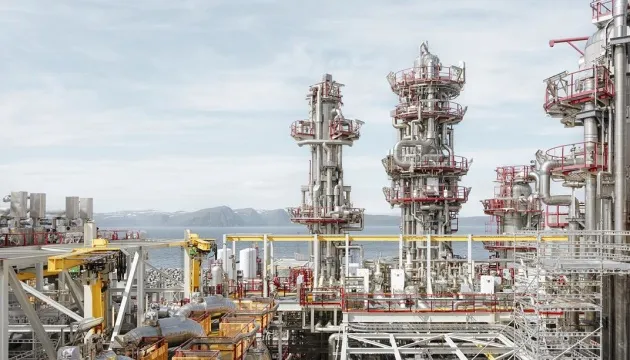
At the same time, despite the restrictions, Russian Novatek, the main shareholder of the Arctic plant in Yamal, is already actively expanding its gas sales in Asian markets. Thus, the EU ban does not eliminate Russian LNG from the global energy market but significantly reduces its presence in Europe.