

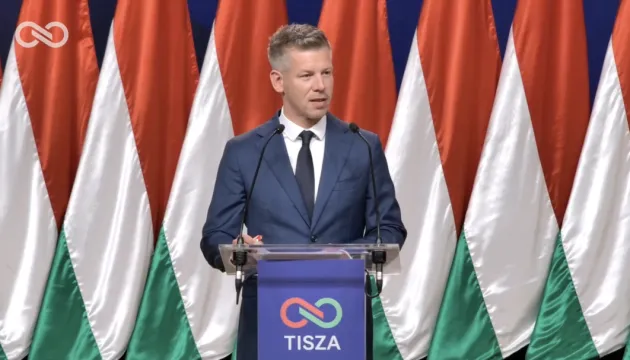
The Hungarian government has made the decision to ban the import of agricultural products from Ukraine. This was announced by the country’s Prime Minister, Péter Mándi, emphasizing that the relevant measures are already coming into effect.
This is reported by Finway
“The government withdraws Hungary’s intention to leave the International Criminal Court and bans the import of agricultural products from Ukraine.”
Legal aspects and preparation of new regulations
The issue of restricting the import of Ukrainian agricultural products has become the subject of extensive discussion within the Hungarian government. Minister of Agriculture and Food Economy, Szabolcs Bóna, explained that the previous government left legal uncertainty in this area. The previously imposed restrictions were related to special provisions of the national state of emergency, which lost validity after its cancellation, and therefore the restrictions were not automatically enshrined in legislation.
Szabolcs Bóna emphasized that his ministry is already preparing new laws to ensure legal certainty regarding the protection of the domestic market and support for local producers. The new restrictions will apply to both meat products (including beef, pork, lamb, goat meat, and poultry) as well as frozen vegetables and grains.
Context: previous restrictions and EU reaction
Hungary first imposed a ban on the import of Ukrainian agricultural products back in April 2023. This occurred against the backdrop of the full-scale war initiated by Russia against Ukraine, when the European Union created “solidarity corridors” for the export of Ukrainian grain through western borders in response to the maritime blockade of Black Sea ports.
After the opening of such corridors, a number of countries, including Hungary, began to appeal to the European Commission, urging the implementation of additional measures to regulate the import of Ukrainian products. According to sector representatives, the influx of large volumes of Ukrainian goods has led to a decrease in prices in the domestic market and caused losses to farmers and producers in EU member states.
It is worth noting that on May 14, Prime Minister Péter Mándi announced the cancellation of the state of emergency that was imposed during the previous government of Viktor Orbán.