

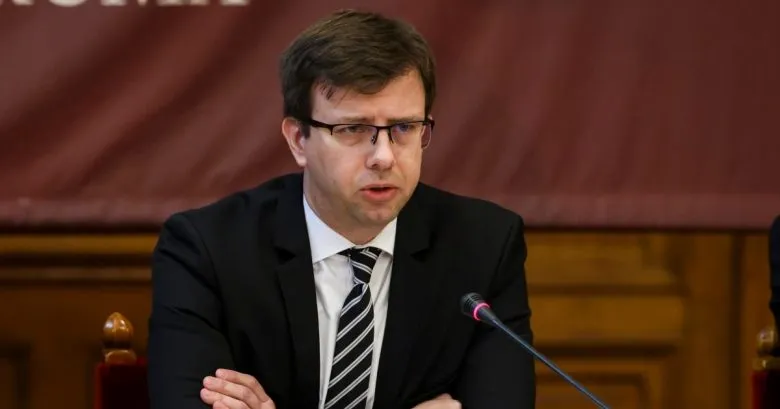
Hungary is receiving significant support from the United States regarding the import of Russian oil. This was stated by the Minister for European Union Affairs, János Bóka, during a conversation with journalists in Brussels ahead of the ministers’ meeting.
This is reported by Finway
Hungary’s Special Position and the U.S. Stance
“Our American partners fully understand the special position of Hungary and Slovakia and show great understanding. In some aspects, they demonstrate even more understanding than our European partners,” Bóka said, emphasizing that Hungarians are in “direct contact” with American partners, rather than negotiating “through the press.”
Bóka highlighted that the United States demonstrates a deep understanding of the energy challenges faced by Hungary and Slovakia. He also noted that the dialogue between the countries occurs directly, which facilitates constructive cooperation on energy security issues.
The Situation of Oil Imports in NATO Countries
Currently, only three NATO countries continue to import crude oil from Russia: Hungary, Slovakia, and Turkey. Hungary and Slovakia remain the most dependent on Russian oil, covering over 85% of their needs through this supply. At the same time, Hungarian representatives emphasize that their country does not support the economy of the Russian Federation, and the scale of imports does not have a decisive impact on financing the Russian military machine.
Minister János Bóka stressed that Hungary’s and Slovakia’s influence on the Russian military economy is minimal, as the combined population of these countries is less than 50 million and accounts for less than 2% of the EU’s gross national income. Alternative oil supplies through the Adria pipeline from Croatia are possible; however, they would entail significantly higher costs for consumers.
Previously, U.S. President Donald Trump mentioned the possibility of imposing “serious sanctions” against Russia if all NATO countries simultaneously refuse to purchase Russian oil.
Meanwhile, the European Union continues its policy of completely abandoning Russian energy sources by 2027, which obliges member states, including Hungary and Slovakia, to actively seek alternative energy suppliers.
In August, Ukrainian forces conducted attacks on the Druzhba pipeline, leading to temporary disruptions in the supply of crude oil to Hungary and Slovakia. In response, the Ukrainian authorities urged Hungary to accelerate the diversification of its energy supply and reduce dependence on Russian resources.
In June, the European Commission presented a gradual plan to phase out Russian oil and gas, including liquefied gas, with the aim of fully transitioning to alternative sources by the end of 2027. According to Reuters, EU governments are keen for the details of this transition to remain confidential.