

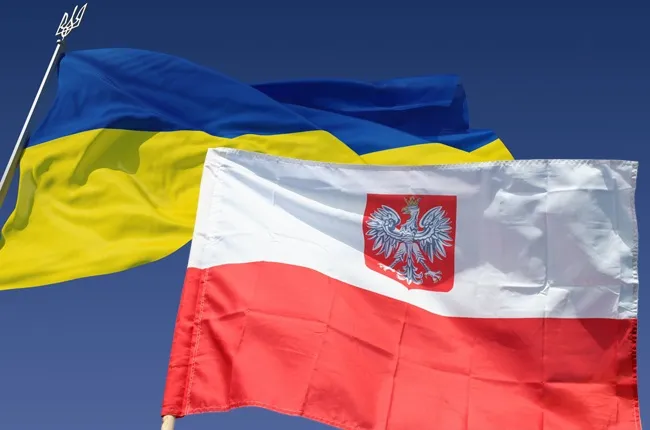
Starting a business in Poland for Ukrainian citizens involves registering what is known as individual entrepreneurial activity – jednoosobowa działalność gospodarcza. This status is mandatory for all foreigners who wish to conduct legal commercial activities in this country.
This is reported by Finway
Required Documents for Business Registration
To become an entrepreneur in Poland, Ukrainian citizens should have one of the following documents:
- Permanent residence permit (stały pobyt);
- Temporary residence permit (karta czasowego pobytu) with the right to conduct business;
- Refugee status or temporary protection (for example, the mark “UKR” in the PESEL number);
- Residence permit for long-term EU residents.
It is important to note that having only a type D visa or a biometric passport does not allow for the registration of a sole proprietorship without additional legalization. The registration of entrepreneurial activity is carried out through CEIDG (Central Registration and Information on Business Activity), where it is necessary to specify the PKD codes (Polish Classification of Activities) according to the chosen areas of activity. Multiple codes can be selected simultaneously.
Tax Systems and Tax Rates
Entrepreneurs in Poland have the option to choose from several tax systems:
- General system (according to the PIT scale): 12% for income up to 120,000 zlotys per year, 32% for income exceeding this amount. Additionally, mandatory social contributions to ZUS (pension, disability, health insurance, as well as voluntary sickness insurance) are paid.
- Linear tax (podatek liniowy): 19% of net income regardless of the amount. This method is suitable for stable and high income but does not provide certain benefits.
- Fixed income tax (podatek ryczałtowy): The simplest option for small businesses, requiring no full accounting. Rates depend on the type of activity and are charged on all income without considering expenses. For example:
- Programming/IT – 12%;
- Consulting services, analytics – 15%;
- Trade in goods – 3%;
- Freight transport – 8.5%;
- Educational services, tutoring – 8.5–15%;
- Repair of equipment, workshops – 5.5–8.5%.
The maximum annual turnover for ryczałt is 2 million euros (approximately 8.6 million zlotys as of June 2025). If this limit is exceeded, the entrepreneur is required to switch to full accounting.
“A sole proprietorship in Poland is called ‘jednoosobowa działalność gospodarcza’, which translates to ‘individual entrepreneurial activity’.”
Additionally, new entrepreneurs are eligible for benefits. In particular, ‘Ulga na start’ – exemption from paying contributions to ZUS (except for health insurance) for the first 6 months, as well as ‘Mały ZUS Plus’ – a preferential regime for the following 24 months.