

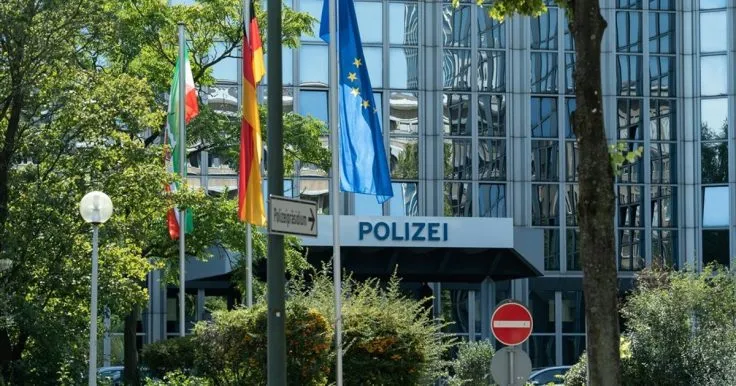
The Federal Office for the Protection of the Constitution of Germany (BfV) has stated that there is an increased likelihood of terrorist attacks by Iranian intelligence services in Europe following the conclusion of the war between Israel and the United States and Iran. According to German intelligence estimates, the Iranian regime may intensify the activities of its agents to pursue regime opponents, as well as to attack Jewish, Israeli, and American targets and Iranian dissidents.
This is reported by Finway
Intensification of Iranian intelligence services and new threats
BfV reports that it is currently monitoring individuals in Germany who have undergone military training in Iran or collaborated with the Iranian authorities. Special attention is given to those who openly support the regime and participate in propaganda campaigns in its favor. One such example is Aytak Barani, a long-time resident of Germany and supporter of Hamas, who was convicted in Frankfurt for glorifying Hamas attacks on Israel on October 7 of last year.
“The level of abstract threat posed by Iranian intelligence services to (pro)Jewish, (pro)Israeli targets, as well as to individuals and groups of Iranian opposition in Germany, remains high,” BfV stated.
Experts believe that Iranian intelligence services are prepared to employ a wide range of methods equated with state terrorism: from threats to individuals to surveillance operations and preparations for attacks. It is noted that Iranian intelligence often uses intermediaries linked to organized crime networks already operating in target countries.
HAYI and new recruitment methods
Since March 2026, the Iranian regime has been actively using a recruitment campaign called “Harakat Ashab al-Yamin al-Islamiyya” (HAYI). According to intelligence, this organization recruits local newcomers, often young petty criminals or minors, through social media, including Snapchat, offering them small amounts of cash for participation in attacks.
Researcher Adrian Stuni reported that he has recorded 17 attacks related to HAYI’s activities across Europe. In most cases, improvised explosive devices were used or arson was carried out at night. In his opinion, these operations are significantly cheaper for the Iranian Revolutionary Guard Corps than preparing professional agents or direct state intervention.
Stuni emphasized that the continuous flow of HAYI attacks threatens the ability of European security services to respond to threats while simultaneously protecting vulnerable sites such as synagogues, schools, and community centers. At the same time, there is an increasing need to monitor the online activities of extremist groups.
BfV also emphasized that state support for the terrorist activities of Iranian intelligence is often carried out through cooperation with already existing criminal groups in Europe.