

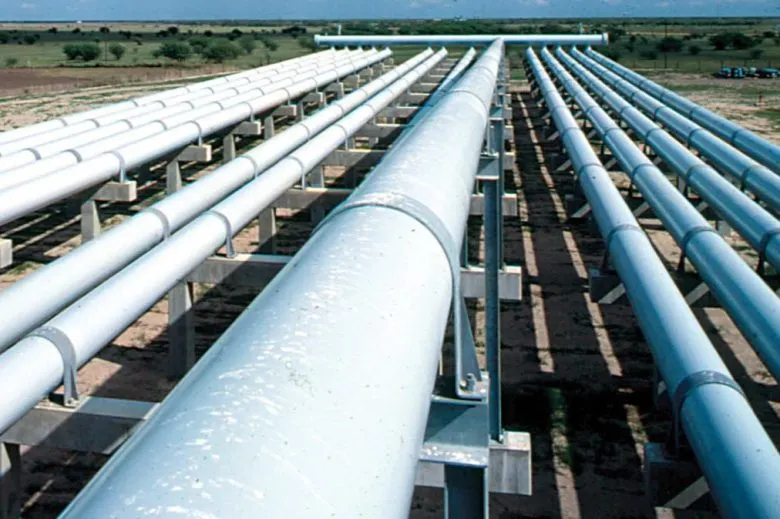
The American company Energy Transfer has announced a major expansion of the Transwestern Pipeline network, investing $5.3 billion in the project. The construction of the new route, set to begin at the end of 2029, will eliminate the transportation capacity shortage for gas producers in the Permian Basin.
This is reported by Finway
Key features of the project and market competition
According to East Daley Analytics analyst Oren Pilant, the new pipeline will become the most expensive project in the USA after the Mountain Valley Pipeline, which cost $7.85 billion and was announced in 2014. Energy Transfer has already secured gas supply commitments from unnamed companies. This gives it an advantage over competitor Kinder Morgan Inc., which also proposed a similar route but may lose its chances of implementation.
“Energy Transfer has reported that it has already secured supply commitments from unnamed companies. This could jeopardize the competing project from Kinder Morgan Inc., which proposed a similar route.”
Market impact and construction details
The news of the large-scale project launch has impacted the market: Kinder Morgan’s shares fell by 4.6%, becoming the biggest losers among the S&P 500 Energy index components for the day, while Energy Transfer’s shares rose by 0.9%, reaching $17.88 at 2:36 PM New York time.
The drilling boom in the Permian Basin in recent years has triggered a sharp increase in oil production and, consequently, a significant rise in associated gas volumes. This has led to situational price drops, even to negative values. According to Energy Transfer’s plan, over 500 miles (about 800 km) of 42-inch diameter pipeline will be laid with a capacity of 1.5 billion cubic feet of gas per day. Additionally, nine compressor stations will be built in the states of Arizona, New Mexico, and Texas.
The project cost is estimated at about $1 billion for every 100 miles of pipeline. However, according to Oren Pilant, the risks of budget overruns are lower than those for the Mountain Valley Pipeline, as construction in desert areas is faster and cheaper than in the challenging conditions of the Appalachian Mountains, where water obstacles significantly slowed down the work.