

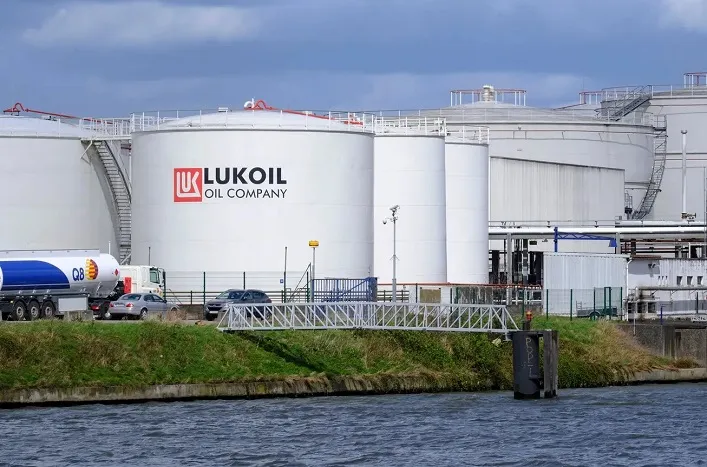
The American oil company Chevron is exploring the possibility of acquiring the international assets of the Russian company Lukoil, which is under sanctions. According to reports, last week the U.S. Department of the Treasury allowed potential buyers to begin negotiations with Lukoil. Thus, Chevron has joined the list of contenders, which also includes the investment firm Carlyle, for a portfolio of assets valued at least $20 billion.
This is reported by Finway
Conditions for Possible Sale and U.S. Restrictions
Chevron is considering the purchase of only specific assets of Lukoil in areas where the companies have mutual interests, rather than the entire portfolio of the Russian company. For example, Lukoil holds a stake in the Nigerian OML-140 license, which is operated by Chevron. Under the conditions set by U.S. authorities, the sale of Lukoil’s foreign assets is only possible if there is a complete severance of ties with the Russian company. Additionally, the proceeds must be deposited into a special escrow account, to which Lukoil will not have access until the sanctions are lifted.
Postponement of Sanctions and Asset Situation in Various Countries
The U.S. Office of Foreign Assets Control (OFAC) has postponed the enforcement of sanctions against Lukoil for three weeks—until December 13. Separately, OFAC has allowed the completion of transactions involving Lukoil’s assets in Bulgaria until April 29, 2026. In this country, the company is already operating under external control—Rumen Spetsov, the director of the Bulgarian tax service, has been appointed by the government as the administrator of the group’s companies in Bulgaria.
In turn, Iraq is asking the U.S. Treasury to postpone sanctions against Lukoil so that the Russian company can sell its stake in the West Qurna-2 oil field. This stake is already being sought by one Chinese company and two Western firms. Iraq has ruled out the possibility of the state buying Lukoil’s stake, considering the project too large. Lukoil owns 75% of the stake in the project, while the remainder is owned by the state-run North Oil Company.
Thus, the sale of Lukoil’s international assets could impact the distribution of energy resources in several countries and represent another step in strengthening the sanctions policy against Russian companies.