

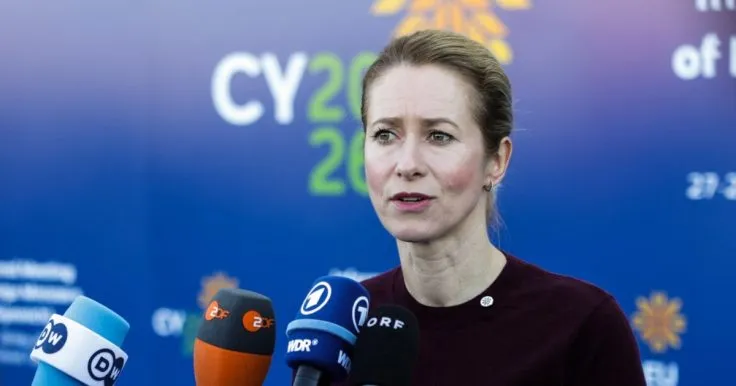
The chief diplomat of the European Union, Kaja Kallas, emphasized the importance of direct dialogue between Ukraine and Russia to achieve peace. Speaking on May 28 at a press conference following an informal meeting of foreign ministers in Limassol, she stressed that an unconditional ceasefire is a key condition for the start of peace negotiations.
This is reported by Finway
The EU cannot be a neutral mediator in negotiations
Kallas pointed out that, despite the possible involvement of third countries in the process as mediators, it is Ukraine and Russia that must personally discuss issues related to their national interests. She emphasized:
“Yes, one more thing about who could be a mediator (in the negotiations – ed.). I think it is very important that we encourage Ukraine and Russia to engage in direct negotiations with each other, because there are many issues that only they can resolve and no one else. So there may be countries that engage in ‘shuttle diplomacy’, but ultimately it is they who must sit down at the negotiating table on those issues that only they can resolve,” Kallas said.
She also explained that the European Union supports Ukraine and cannot act as a neutral party in the negotiations, as it defends the interests of both Europe and Ukraine itself. Kallas stressed that the EU will continue to coordinate its actions with the United States, emphasizing that all diplomatic efforts of the EU should complement U.S. policy, not replace it.
Demands on Russia and future sanctions
During the meeting in Limassol, EU foreign ministers discussed possible conditions for future negotiations with Russia regarding the end of the war in Ukraine. Kallas noted that Europe must demand that Moscow cease its subversive activities, cyberattacks, interference in elections, and violations of airspace over European countries. She emphasized the need to ensure accountability for the destruction caused by Russia, as well as the full recognition of Ukraine’s sovereignty and independence in the event of a peace agreement.
Kallas also highlighted that restrictions on the Ukrainian army could pose a danger to European security if Russia continues to rearm simultaneously. She stated that there can be no legal recognition of the occupation of parts of Ukrainian territories, and Russia must cooperate with international investigations and compensate for the damages caused.
Particular attention was paid to security issues in Georgia and Moldova, where the presence of Russian troops threatens the stability of the entire region. According to Kallas, Europe must use its economic leverage more effectively, particularly in trade, investments, and partnerships, and is already preparing a new package of sanctions against Russia to increase pressure and encourage real negotiations.
Despite Kallas’s assessment that the situation is changing in favor of Ukraine, Russia still shows no genuine interest in establishing peace.
Due to the tense situation in the Middle East, trilateral negotiations involving Ukraine, the U.S., and Russia, which took place in January and February, are currently postponed indefinitely. Sources report that both sides — in Kyiv and Moscow — consider the resumption of the negotiation process unlikely even after the conflict in the Middle East ends. According to these reports, Ukraine is disappointed by Washington’s failure to pressure Putin and believes that negotiations hit a deadlock back in February.
For its part, the Russian authorities insist on the transfer of the entire Donbas as a key condition for a peaceful settlement and claim that they allegedly received consent for this from the U.S. president during last year’s meeting in Anchorage. Ukraine, on the other hand, proposes a ceasefire along the front line but does not legally recognize the occupied territories as part of Russia.
U.S. Secretary of State Marco Rubio noted that Washington is ready to continue mediating between Ukraine and Russia, although previous rounds of negotiations have yielded no results and talks are currently not taking place.