


In October 2025, leading cryptocurrencies — Bitcoin and Ethereum — showed negative dynamics for the first time in several years. According to CoinGlass, Bitcoin decreased by 3.7%, while Ethereum fell by 7%, which is a rare occurrence for this month, traditionally considered a period of growth in the crypto market.
This is reported by Finway
Disruption of Traditional October Dynamics
October has typically been marked by positive results for Bitcoin, giving rise to the term “Uptober.” However, in 2025, this trend was disrupted — it is only the third time in history that Bitcoin has shown a decline in October (the previous instances were in 2014 and 2018). The profitability chart indicates that this year’s drop was an exception to the overall trend.

Impact of Macroeconomic Factors on the Cryptocurrency Market
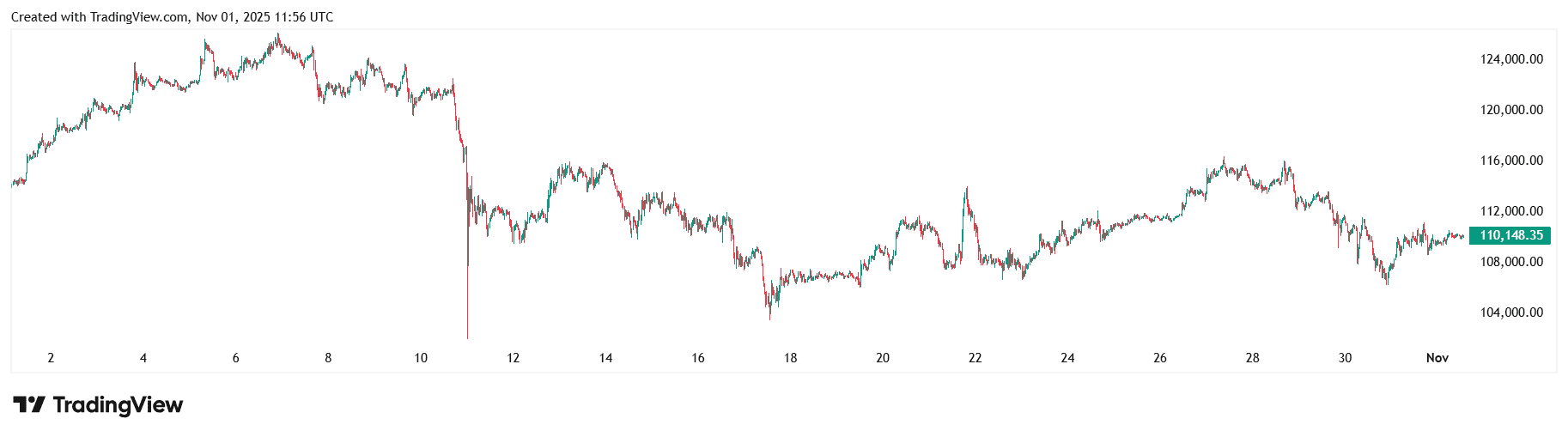
The main reasons for the decline were macroeconomic shocks. In particular, in mid-October, Bitcoin sharply dropped after U.S. President Donald Trump’s statement regarding the potential imposition of 100% tariffs on Chinese goods. Although the market partially recovered after the situation stabilized, further declines were triggered by a decisive speech from Federal Reserve Chair Jerome Powell, who indicated that the Federal Reserve might not lower interest rates in December 2025.
“Throughout the month, the asset experienced several significant drops caused by macroeconomic factors. In particular, on October 10-11, it fell amid President Donald Trump’s threat to impose 100% tariffs on products from China.”
By the end of the month, Bitcoin’s rate fluctuations had decreased, and the market transitioned into a sideways trend.
Ethereum also closed October with a decline, marking its second consecutive drop. Throughout its history, Ethereum has shown a negative result in October four times, with the largest drop recorded in 2016 (16.83%).

The decline in Ethereum’s value is attributed to the same macroeconomic factors as those affecting Bitcoin. After the crash on October 10-11, the rate did not return to the $4500 mark that the asset had maintained until that point.
