

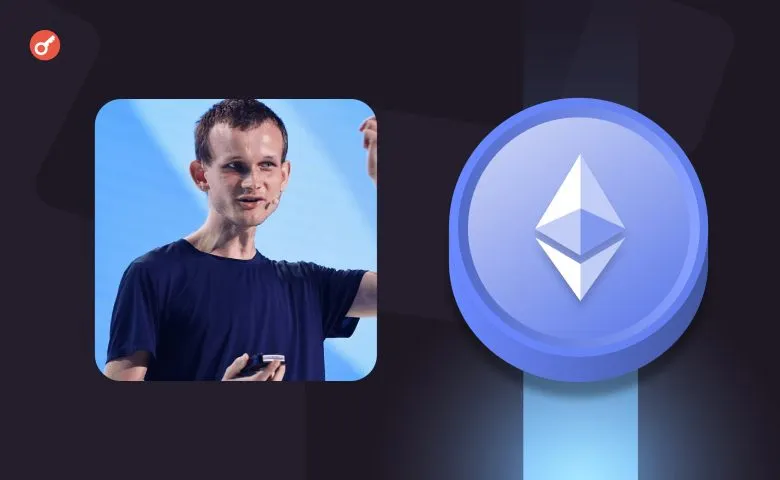
Ethereum co-founder Vitalik Buterin has presented a new initiative aimed at reducing the requirements for network nodes, allowing regular users to more easily run local full nodes without sacrificing scalability. This innovation aims to make the platform more accessible to a wider audience.
This is reported by Finway
The proposal, which has received approval from many experts in the ecosystem, including Mikhail Zolotov and Tony Vorstetter, is designed to lower the barriers for those wishing to have their own RPC server for private and decentralized access to the Ethereum network. Buterin notes:
“The value of having your own node lies not only in network verification but also in the ability to access blockchain data locally, trustfully, and privately.”
The Ethereum Virtual Machine (EVM) with zero-knowledge (ZK-EVM) and privacy technologies, such as PIR (Private Information Retrieval), enables users to access external services. However, there are significant limitations, including the high cost of cryptographic solutions and the risks of metadata leakage, such as IP addresses and request times. Buterin emphasizes:
“A market dominated by a few RPC providers is easily susceptible to censorship pressure. Some are already blocking entire countries.”
Among Buterin’s short-term proposals is the full implementation of EIP-4444, which involves retaining history for only the last 36 days to reduce disk space requirements, as well as distributed data storage using erasure coding to ensure resilience. There are also plans to change the gas pricing structure to reduce data storage costs and lower execution expenses.
In the medium term, Buterin sees a need for static verification, which will reduce the necessity of retaining Merkle branches while maintaining full RPC functionality. Among the innovations will be the introduction of a new type of node that can:
- verify blocks without retaining the full state;
- store only a user-defined portion of the state;
- process local RPC requests;
- not retain the branches of the Merkle tree, only “raw” values.
This approach will allow users to choose node configurations according to their needs, ensuring the highest level of privacy. Buterin summarizes:
“Such a node provides local access to important state with maximum privacy.”
Additionally, he emphasizes that these innovations will help maintain the decentralization, privacy, and openness of the Ethereum network in the face of potential gas price increases by several times. It is worth noting that a recent update, Pectra, has occurred in the Ethereum network.