

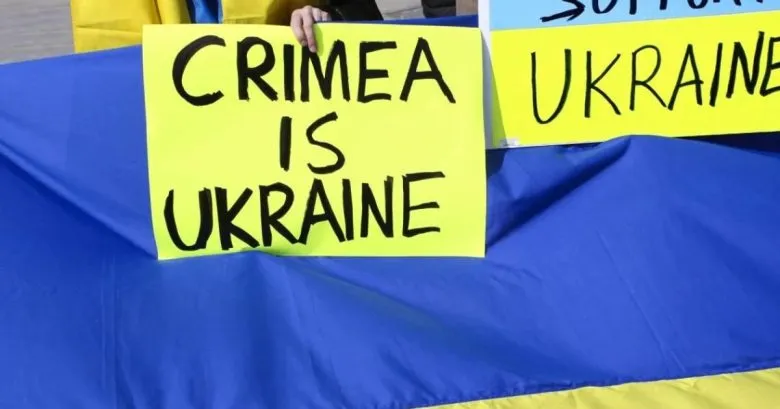
Turkey has once again reaffirmed its position regarding the non-recognition of Crimea’s annexation by Russia, emphasizing its support for Ukraine’s sovereignty and territorial integrity. The Turkish Ministry of Foreign Affairs released a corresponding statement on the occasion of the 12th anniversary of the illegal seizure of the peninsula, highlighting the country’s consistent policy on the Crimea issue.
This is reported by Finway
Turkey’s Position on Crimea and Support for Crimean Tatars
The Turkish Foreign Ministry’s statement emphasizes that the country does not recognize the de facto situation resulting from the annexation of Crimea, as it constitutes a violation of international law. Since 2014, the Turkish authorities have opposed any change in the status of the peninsula and do not recognize the results of the so-called referendum.
“On the twelfth anniversary of the annexation of the Autonomous Republic of Crimea of Ukraine by the Russian Federation through an illegal referendum, we reiterate that Turkey does not recognize the de facto situation in Crimea, which constitutes a violation of international law.”
The Turkish Foreign Ministry stresses that it will continue to support Ukraine’s independence, sovereignty, and territorial integrity, and will closely monitor the situation in Crimea, paying special attention to the status of the Crimean Tatars.
Reaction of the Russian Federation and Historical Context
The Russian Foreign Ministry has not yet commented on Turkey’s statement; however, it published a post dedicated to the 12th anniversary of the so-called “all-Crimean referendum.” According to the Russian side, over 96% of voters supported the “joining” of Crimea to Russia with a turnout of 83%, and in Sevastopol, over 95% with a turnout of nearly 90%. Russian officials also reported the presence of international observers and numerous journalists during this voting.
Additionally, Russia reminded about the 105th anniversary of the signing of the Moscow Treaty of 1921 between the Russian Socialist Federative Soviet Republic and the Grand National Assembly of Turkey.
The annexation of Crimea remains the subject of widespread international criticism. March 16 marks 12 years since the illegal referendum organized under the control of Russian military forces without identifying insignia. The self-proclaimed Crimean authorities claimed alleged mass support for joining Russia, and on March 21, 2014, Putin signed a law on the incorporation of Crimea and Sevastopol into the Russian Federation.
The European Union and the United States have never recognized the results of the so-called referendum, emphasizing violations of international law, the UN Charter, and the OSCE Charter. In 2015, a book titled “#CrimeaIsOurs” was presented in Moscow, compiling arguments against the legality of the annexation from the perspective of Russian law, as well as political and moral aspects. In 2019, Mustafa Jemilev, the leader of the Crimean Tatar people, stated that those around Putin recognized the annexation of Crimea as a mistake.
Currently, Crimea is being used by Russia as a large military base. Analysts point to vulnerable logistical chains that Russia uses to supply the occupied region. In September 2023, Ukrainian President Volodymyr Zelensky signed a law to change the administrative-territorial structure of Crimea, which includes defining new borders and administrative centers for communities.