

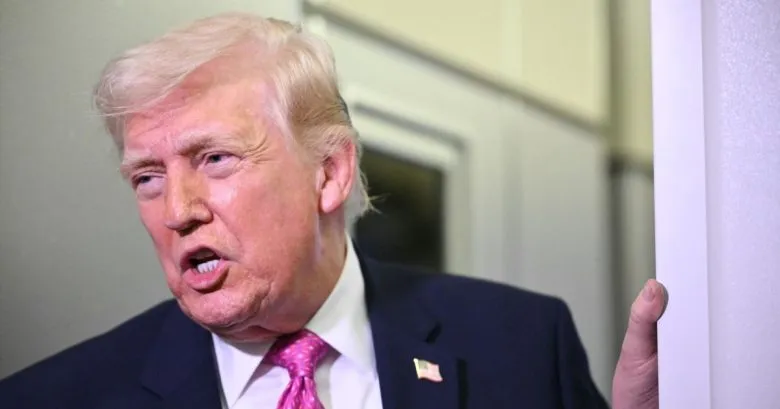
U.S. President Donald Trump expressed a desire to establish control over Iranian oil and did not rule out the possibility of seizing the island of Khark. In his statements, he emphasized that negotiations between Washington and Tehran are currently going “extremely well,” and he expressed confidence in the possibility of reaching a peaceful agreement.
This is reported by Finway
Negotiations between the U.S. and Iran: progress and demands
In an interview published in the Financial Times, as well as during discussions with journalists aboard Air Force One, Trump noted that negotiations with Iran are taking place in both open and indirect formats. He emphasized that Tehran is partially opening the Strait of Hormuz—a crucial transport route through which approximately 20% of the world’s oil and natural gas supplies pass.
The U.S. President did not provide additional details regarding the progress of the negotiations, while Iranian leaders deny their participation in them. According to Tehran, the United States has presented a 15-point peace plan, which Iran does not accept.
“We are doing extremely well in these negotiations. But you never know what is happening with Iran, because we negotiate with them, and then we always have to undermine them… whether with B52 bombers or by tearing up the landmark 2015 nuclear deal that Tehran signed with world powers, including the United States, Russia, and China,” Trump noted.
Trump also stated that the likelihood of reaching an agreement is quite high, but he does not rule out the possibility of negotiations failing. According to him, the current Iranian regime has been destroyed and shattered, and the current leadership is acting prudently, although he did not disclose further details.
Strategic statements regarding oil resources and military presence
In the Financial Times interview, Trump compared the situation with Iran to events in Venezuela, where, according to him, the U.S. has “indefinitely” taken control of the oil industry following a military operation against Nicolás Maduro. He emphasized that he is particularly interested in Iranian oil, despite criticism from some American politicians.
The U.S. President added that he is considering the option of seizing the island of Khark—a key hub for the export of Iranian oil. If such a scenario is realized, the American presence on the island could be prolonged, and, in Trump’s view, Iran lacks sufficient defensive capabilities there.
Despite the tough statements, Trump emphasized that indirect negotiations with Iran through Pakistani intermediaries are progressing successfully. Iran has been given a deadline of April 6 to accept a ceasefire agreement; otherwise, the U.S. will strike at the country’s energy infrastructure.
The main demand from the U.S. is the complete reopening of the Strait of Hormuz, which remains partially blocked. Iran, for its part, has agreed to allow vessels from “non-hostile” states to pass through, which Trump considers a positive development.
Pakistan’s Foreign Minister Ishaq Dar stated that Islamabad is ready to organize negotiations between Washington and Tehran with the aim of achieving a comprehensive resolution to the conflict. However, it remains unclear whether both sides have agreed to participate in such negotiations.
Since the end of February, the U.S. and Israel have been conducting a military operation against Iran. As a result of the strikes, Supreme Leader Ayatollah Ali Khamenei was killed, and military and nuclear facilities were hit. In response, Iran is striking at American bases and U.S. allies’ facilities in the Gulf countries.
Following the outbreak of the conflict, Iran has effectively blocked the Strait of Hormuz, which is strategically important for the global energy market, as oil transportation from Gulf countries occurs through it.