

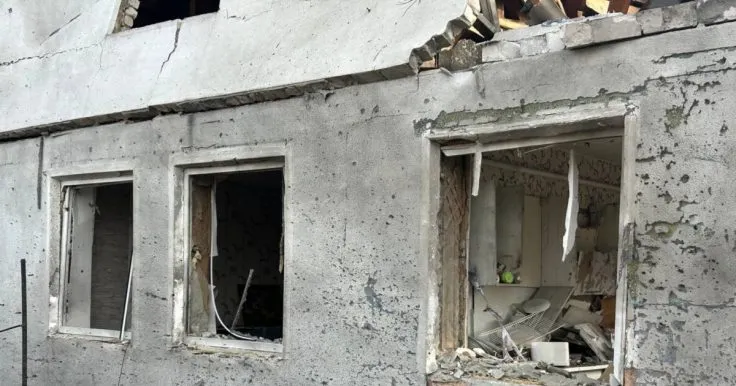
On the night of May 28, Russian forces launched over 20 attacks on two districts of Dnipropetrovsk region, using drones and artillery. This was reported by the head of the regional military administration, Oleksandr Hanzha.
This is reported by Finway
Consequences of strikes on Pavlohrad and Nikopol districts
In the Pavlohrad district, damage was recorded to a five-story residential building, a private home, and a local lyceum. As a result of the shelling, three people were injured: a 38-year-old man was hospitalized in moderate condition, while a 69-year-old woman and a 62-year-old man sustained injuries and will undergo outpatient treatment.
“The 38-year-old man was hospitalized in moderate condition. The 69-year-old woman and the 62-year-old man will receive outpatient treatment,” Hanzha stated.
In the Nikopol district, the settlements of Nikopol, Chervonohryhorivka, Marhanets, and Pokrovske communities came under fire. There, a residential building and a gas station were damaged.
Systematic strikes on civilian infrastructure
According to Oleksandr Hanzha, in the evening of May 27, over 20 shelling incidents by Russian troops were also recorded in four districts of the region, but at that time there were no casualties among the civilian population. The Russian army regularly conducts attacks using strike drones, missiles, aerial bombs, and rocket artillery, deliberately destroying Ukrainian cities and critical infrastructure facilities across all regions of the country.
Ukrainian authorities and international organizations emphasize that such strikes exhibit signs of war crimes by the Russian Federation and are deliberate.
Shelling of vital infrastructure, destruction of energy facilities, water supply systems, healthcare institutions, and other critical elements of infrastructure are regarded by experts as manifestations of genocidal actions. Leading human rights defenders and researchers note that during the large-scale war, Russia is committing crimes that may fall under the definition of genocide, including the persecution and destruction of individuals with pro-Ukrainian positions, the abduction of children, the destruction of cultural heritage, and the eradication of Ukrainian identity in occupied territories.
The Convention on the Prevention and Punishment of the Crime of Genocide, adopted by the UN in 1948, obliges member states to prevent acts of genocide and punish them during wartime and in peacetime. Actions aimed at the complete or partial destruction of a national, ethnic, or religious group are defined as genocide. Signs of such crimes include killings, causing serious bodily harm, creating conditions incompatible with life, as well as the forcible transfer of children and public incitement to destroy a group.
In contrast, the Russian leadership denies accusations of deliberate strikes on civilian infrastructure and the killing of the peaceful population of Ukraine, despite numerous evidence of the destruction of hospitals, schools, energy facilities, and other vital objects.