

Analysts at the Institute for the Study of War believe that the Russian authorities aim to exploit the escalation in the Middle East to create grounds for blaming the U.S. for a potential failure of peace negotiations regarding Ukraine.
This is reported by Finway
Manipulative Rhetoric of Russian Politicians
As noted by ISW, on March 5, Russian Foreign Minister Sergey Lavrov criticized the U.S. position on joint American-Israeli actions against Iran, claiming that Washington is allegedly trying to destabilize the entire Middle East region and disrupt relations between Iran and the Gulf states.
“Lavrov asserted that many Russian politicians, political scientists, and analysts are concerned about the timing of U.S. operations against countries with which they are negotiating, and how this relates to peace talks in Ukraine. Lavrov accused the United States of conducting military operations against Iran and Venezuela, even while negotiations are proceeding successfully,” the report states.
According to ISW, Lavrov also mentioned the decline in the ‘spirit’ of the Russian-American summit in Alaska that took place in August 2025, but emphasized that the main focus is on the agreements reached. Analysts point out that the Kremlin may deliberately use such vague formulations to create the impression of an official agreement between the U.S. and the Russian Federation.
The ISW report emphasizes that Lavrov is trying to appear as a moderate voice, oriented towards Russian society and partners, while avoiding sharp criticism of the Trump administration.
Discrediting Peace Talks and the Role of Other Russian Officials
At the same time, other representatives of the Russian government, such as Deputy Chairman of the Security Council Dmitry Medvedev, use U.S. military actions against Iran for harsh criticism of the American side. Experts estimate that Medvedev traditionally voices more radical positions that reflect the true stance of the Kremlin, although not always publicly articulated.
ISW experts emphasize that the Kremlin has long sought to delay or block peace negotiations with Ukraine, as it is not interested in any agreements that do not align with its initial military objectives. At the same time, Russia is trying to avoid new sanctions or actions that could compel it to engage in constructive negotiations.
The Kremlin is also forced to balance its relations with the U.S. and its allies, including states like Iran. Analysts observe that the rise in anti-American rhetoric following the start of joint U.S. and Israeli operations against Iran complicates this balance.
ISW researchers suggest that direct accusations against the U.S. may be used by Russia to justify its own guilt in a potential breakdown of peace negotiations regarding the war in Ukraine.
Recently, President Volodymyr Zelensky stated that trilateral negotiations involving Ukraine, Russia, and the U.S. were suspended due to the escalation of hostilities in the Middle East.
Since the beginning of 2026, several rounds of trilateral talks have taken place: in January and early February, delegations met in Abu Dhabi, and in mid-February – in Geneva. A new meeting was planned for early March in Abu Dhabi, but agreements on it were reached before the conflict in the Middle East began.
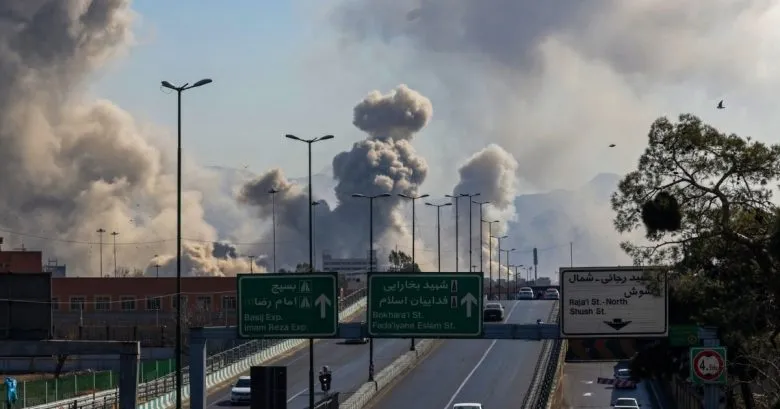
Since February 28, military strikes by Israel and the U.S. against Iran have been ongoing, in response to which Iran is attacking Israel and American facilities in the Gulf states.